Investing During War: A Bet on Global Markets, Diversification, and Artificial Intelligence
Time for Action has analyzed current venture investment approaches in the context of full-scale war and currency restrictions. The conclusion is clear: war has not stopped capital markets, but it has changed investor behavior and raised the bar for portfolio structure and risk management.
A growing segment of Ukrainian investors follows a simple principle: there is no “perfect moment” to enter the market. Markets move in cycles, and long-term global index performance demonstrates growth despite crises, wars, and financial turbulence. The core rule is diversification. Venture capital cannot be the only asset class in a portfolio. A balanced structure combines securities, real estate, deposits, and a calculated share of high-risk startup investments. Venture capital is not suitable for investors with zero tolerance for risk. It is an instrument for those who have free capital, are ready to distribute it across multiple deals, and accept the possibility of losses.
Startup investing remains attractive because of its potential for exponential growth. However, the focus is not on early experimental ideas but on companies with confirmed annual revenue, rapid growth, and a defined exit strategy. Global statistics show that most successful exits occur in developed markets, particularly in the United States. The Ukrainian startup ecosystem exists, but its scale is limited. Building a fully diversified portfolio solely from Ukrainian projects is practically impossible. International practice indicates that a portfolio of 10-40 deals reduces risk and allows gains from “star” companies to offset losses from weaker projects.
Artificial intelligence is no longer a standalone sector; it is embedded across business models. According to market participants, around 80% of startups currently seeking funding use AI technologies in some form. This does not guarantee success. Large exits in AI are still relatively few, but the technology is already transforming logistics, construction, customer support, data processing, marketing, and digital content creation. Investors see the potential for entire industries to shift. At the same time, selectivity remains strict. Highly complex or heavily regulated sectors, as well as areas with unpredictable legal exposure, are approached with caution.
Returns Without Illusions
The classic venture portfolio model is pragmatic:
- about 25% of projects fail;
- roughly 25% underperform expectations;
- around 50% achieve exits, with a portion generating the majority of returns.
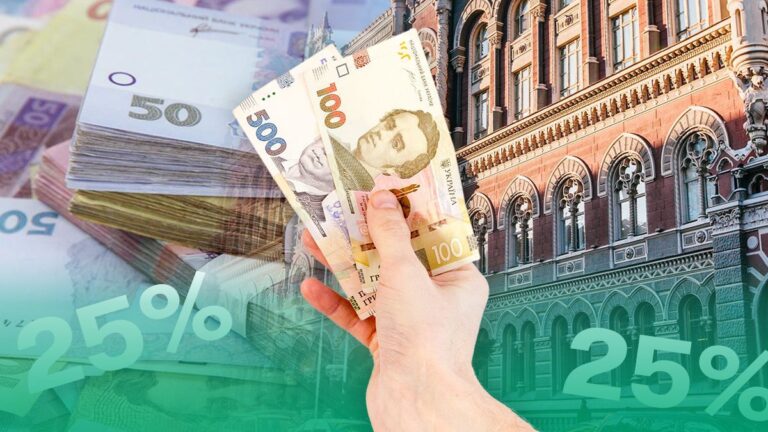
Expected returns are approximately 25% annually in USD, with a 3–5 year horizon. This implies the possibility of doubling or tripling invested capital, but without guarantees.
Key risks include:
- limited liquidity shares cannot be sold at any moment;
- minority positions without operational control;
- the possibility of total capital loss.
The full-scale war has reshaped how Ukrainian investors allocate capital. Concentrating all assets within one jurisdiction is increasingly viewed as strategically risky. As a result, interest in global investment structures has grown. Most investors remain Ukrainian, but their geographic footprint has expanded. War has not reduced deal flow, yet it has increased demand for structured international instruments.


Currency Restrictions and Legal Mechanisms
Wartime currency controls imposed by the National Bank have complicated outbound capital movement. Investors use several lawful mechanisms:
- purchasing foreign currency within permitted limits;
- opening bank accounts abroad;
- investing through foreign legal entities;
- utilizing international financial platforms.
Investment structures are typically organized through dedicated vehicles for each deal under English law. This framework allows investors to hold ownership through a transparent legal structure.
Over the past year, more than a dozen deals were closed with total investments exceeding $12 million. The average ticket surpassed $1 million. Some projects generated dividend returns following substantial company revaluations. No investments have been written off so far, though market participants openly acknowledge that losses are an inherent part of venture capital. The goal for the coming year is to expand the portfolio to $50 million.
Venture investing during war is not about emotion; it is about discipline. The market has not stopped, but it has become more demanding. The focus is on global markets, later-stage companies, strict project selection, and diversification. Artificial intelligence has become a central direction, but it is not a universal guarantee of success. Investors must understand that venture capital offers high potential alongside high risk. Without portfolio diversification, liquidity reserves, and patience over a three-to-five-year horizon, this strategy will not work. War has changed the geography of capital, but not its movement. In today’s environment, the decisive factor is not whether to invest, but how the investment is structured.
About the Author

Related posts:
 Fuel prices are rising: how geopolitics, currency movements and winter are jointly pushing costs higher in Ukraine
  How Crypto Crash Changed Youth Investment Attitudes in Ukraine: Risks, Choices, and New Financial Literacy
  Investing in Cryptocurrency: Reality, Risks, and Common Sense
  Ukraine’s Currency Market: Control, Risks, and “Black Swans” on the Horizon