British Components in Geran-2 Drones: How Russia Gets Electronics Through Third Countries
Electronic components manufactured by British companies after the start of the full-scale invasion have been discovered in Russian Geran-2 attack drones used to strike Ukrainian cities. Time for Action has examined what exactly was found in the downed drones, how these parts could have reached Russia, and whether this implies direct violations of sanctions by Western manufacturers.
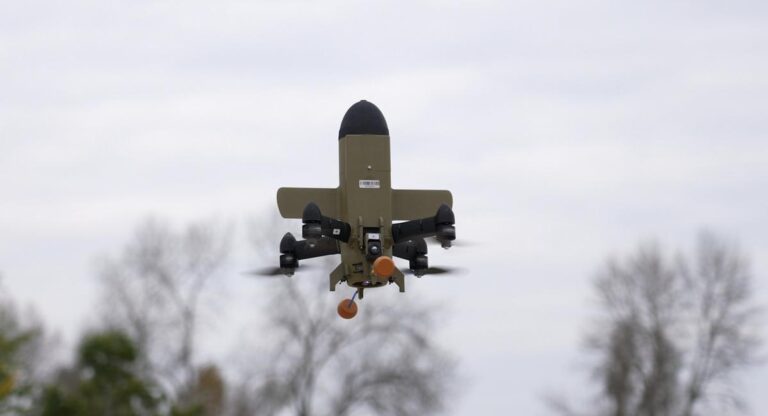
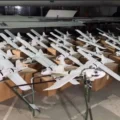
The Geran-2 is the Russian version of the Iranian Shahed drone a weapon that has become one of the primary tools of aerial attacks against Ukrainian infrastructure. After analyzing the wreckage, Ukrainian specialists and international investigators identified a number of electronic components of British origin inside these aircraft. Among the detected parts were quartz resonators produced by AEL Crystals in 2023, power management chips from Dialog Semiconductor UK, signal conversion components from FTDI, Raspberry Pi microcomputers, fuses from Golledge Electronics, power supply elements marked XP Power, and connection components from Isocom Components 2004 Ltd.
The fact that these components were manufactured after 2022 is critical. It indicates that they were not pre-war stockpiles but entered Russia’s military production system during the sanctions period. At the same time, investigations do not report direct deliveries from British companies to Russian manufacturers. Import data suggest that the components were supplied through third countries, including companies based in China and Hong Kong. Such schemes complicate the identification of the final recipient and blur legal responsibility.
Following the start of the full-scale war, the United Kingdom and the European Union banned the export of dual-use goods to Russia. However, enforcement mechanisms have limitations. When products are legally sold to registered companies in third countries and are not classified as military items, proving deliberate violations by the original manufacturer becomes extremely difficult. The Chair of the UK Parliament’s Foreign Affairs Committee, Emily Thornberry, stated that sanctions “are too easy to circumvent” through third parties and require stricter control. This assessment effectively acknowledges vulnerabilities within the sanctions framework.
The mechanism appears straightforward: civilian electronics are sold legally, resold by intermediaries, and ultimately end up in military equipment. Many of these components have broad applications from household electronics to industrial systems. Their versatility makes them attractive for military producers and difficult to completely restrict.
Investigators also report that British components were found not only in drones. They have been identified in Russian T-72 tanks, air defense launch systems, and even short-range ballistic missiles. This points to the systematic use of Western electronics within Russia’s military-industrial complex. At the same time, none of the published materials provide evidence of direct cooperation between British companies and Russian defense structures. Some manufacturers have stated that their products may have been counterfeited or resold without their knowledge.
Post List



Energy and pipeline sanctions often attract greater public attention, yet microelectronics remain critical in modern warfare. Without stable access to chips, controllers, resonators, and signal converters, it is impossible to ensure navigation accuracy, communication stability, and drone control systems.
The issue extends beyond specific components to the structure of global supply chains, which are difficult to fully isolate from military use. The global electronics industry operates through multi-layered distribution networks. Each additional intermediary reduces transparency and complicates oversight. Thus, it is confirmed that British-manufactured components produced after the start of the full-scale war have been found in Russian Geran-2 drones. There is no direct evidence of illegal deliveries by the manufacturers themselves. Instead, the findings reveal weaknesses in the sanctions system that Russia exploits through third-country channels.
Sanctions function, but they can be bypassed. And as long as oversight of supply chains remains fragmented, the technological base for weapons production continues to be built from components created within the civilian world.
About the Author

Related posts:
 Russian Drones over Poland and “Zapad-2025” Exercises: How NATO Reacts to a New Challenge
  From Six Months to Ten Days: How Digital Systems and Drones Are Reshaping Ukraine’s Defense Industry
  Anti-Shahed Defense System: How the Armed Forces of Ukraine Are Expanding Their Capabilities Against Kamikaze Drones
  Ukraine moves to mass production of interceptor drones