Crew-12 Mission: SpaceX Dragon Launch to the ISS and NASA’s Shift Toward Deep Space Exploration
The launch of the Falcon 9 rocket carrying the SpaceX Dragon spacecraft from Space Launch Complex 40 at Cape Canaveral marked another confirmation that crewed flights under the Commercial Crew Program have become systematic. Time for Action analyzed what the Crew-12 mission means for the U.S. space strategy and international cooperation in orbit.
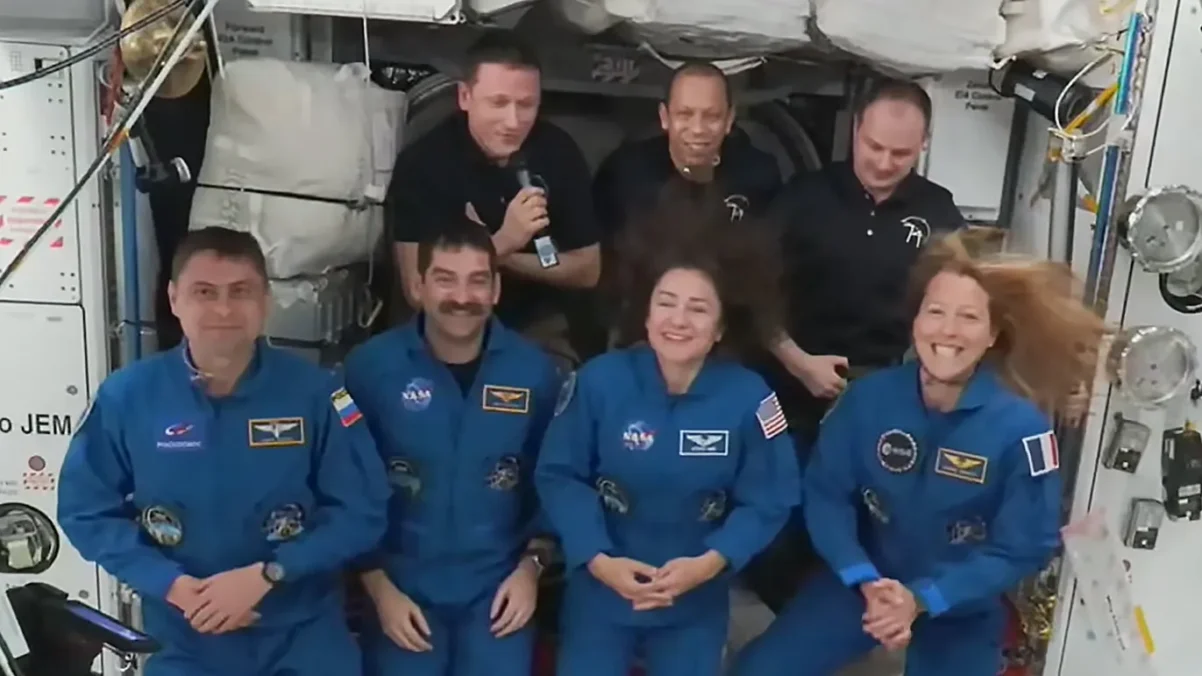
On board Dragon are four crew members: Roscosmos cosmonaut Andrey Fedyaev, NASA astronauts Jack Hathaway and Jessica Meir, and European Space Agency astronaut Sophie Adenot. After docking with the Harmony module of the International Space Station, the crew will join Expedition 74.
Crew-12 has become the twelfth rotational mission within the Commercial Crew Program. In practice, this reflects the consolidation of a new model: the delivery of astronauts to the ISS is carried out through cooperation between a government agency and a private company. This means crewed spaceflights are no longer treated as isolated events but operate as an established system. The international composition of the crew confirms that the ISS remains a platform for cooperation even under complicated political circumstances. Representatives of NASA, ESA, and Roscosmos working within one expedition demonstrate that functional channels of interaction in the space sector continue to operate.
The research agenda of Crew-12 has a clearly applied focus. Astronauts will study bacteria that cause pneumonia, examine how physical characteristics of the human body affect blood circulation in microgravity, and test technologies for producing intravenous fluids directly in space. A separate block of work concerns plants monitoring their condition and studying their interaction with microorganisms to improve food production efficiency during long-duration missions.
NASA directly links these studies to a strategic objective: preparation for missions beyond low Earth orbit, particularly to the Moon and Mars. In this framework, the orbital station functions as a testing ground for technologies intended to ensure the autonomy of future crews. At the same time, the program has faced serious challenges. In January 2026, a decision was made to return four astronauts of the Crew-11 mission to Earth ahead of schedule due to a medical issue involving one crew member. This became the first medical evacuation in the history of the ISS, which has operated with continuous crew rotations since 2000. The decision demonstrated that the emergency response system functions, while also highlighting the vulnerabilities inherent in long-duration missions.
Particular attention should be paid to NASA’s decision to equip its crews with modern smartphones. The new devices will be used for the first time by astronauts of Crew-12 and Artemis II. The initiative goes beyond communication or image capture. NASA Administrator Jared Isaacman emphasized the need to accelerate certification procedures for modern commercial equipment for spaceflight. Jared Isaacman stated:
“Not less importantly, we challenged long-standing processes and qualified modern equipment for spaceflight on an accelerated timeline. This agility will serve NASA well as we pursue the most valuable science and exploration in orbit and on the surface of the Moon.”
Post List



This reflects a shift in internal approaches within the agency. The use of commercially available technologies in space implies a revision of established procedures and a reduction in the time required to approve equipment for operational use.
The launch of Crew-12 also followed a delay due to unfavorable weather conditions. Similarly, the Artemis II mission was postponed to March 2026 to allow additional time to address issues identified during a full countdown rehearsal. These decisions indicate that strict safety requirements remain in place even under schedule pressure. Crew-12 illustrates a dual process. On one hand, the crewed flight program to the ISS operates regularly and predictably. On the other, NASA is actively preparing for a new phase of space exploration, in which the orbital station serves as an intermediate step before long-duration missions beyond Earth.
About the Author

Related posts:
 Agricultural Land Market: Transition to a Structural Model or a Phase of Cautious Growth
  Tesla Presents “Affordable” Model 3 and Model Y: Analysis of the New Strategy
  Technological Transformation in the Banking Sector: Ukrainian Banks in the New IT Reality
  Ukraine and the IMF: Status of Structural Benchmarks and Prospects for a New Program