Elections in Ukraine During War: Why a Spring 2026 Scenario Looks Unlikely and What Blocks It
In recent weeks, the topic of possible elections in Ukraine has once again returned to the center of public discussion. Statements by European officials, reports in Western media, comments from members of parliament, and expert assessments have created the impression that the issue could move from the theoretical to the practical. Time for Action analyzed all the key statements and positions to separate political assumptions from real prerequisites.
The EU High Representative for Foreign Affairs and Security Policy, Kaja Kallas, clearly outlined her position: holding elections during the war is not a good decision.
“Holding elections in wartime conditions in Ukraine is not a good decision.”
She recalled that the constitutions of many European countries prohibit holding elections during war, because an election process always means internal political competition. In a situation of external aggression, the state needs to concentrate its resources on resisting the enemy, not on competition between political forces.
Kallas also pointed to the negotiation dimension. According to her:
“We see that Ukrainians are ready to make concessions to end this war. However, we have not seen any concessions from the Russian side.”
She had previously stated that any potential peace agreement must include a requirement for Russia to limit the size of its army, and that the EU must play a clear role in carefully verifying any such agreement. Thus, Brussels’ position rests on two principles: security and realism in negotiations. As long as hostilities continue and there are no signs of concessions from Russia, an election process looks politically and security-wise risky.
The information wave around May
A Financial Times report about possible preparations for presidential elections and a referendum by May 15 triggered a new wave of debate. At the same time, denials appeared immediately in the public sphere. Sources in the president’s circle stated:
“As long as there is no security, there will be no announcements about elections.”
Member of parliament Yaroslav Zhelezniak emphasized:
“I absolutely do not believe the forecast on the date.”
He also stressed that a hard deadline from the United States had not been confirmed.
Member of parliament Oleksii Honcharenko stated directly:
“There will be no elections in May and no referendum either.”
Serhii Sternenko added:
“Holding an election process is impossible without a stable and lasting cessation of hostilities. And our enemy will not agree to this and shows no sign of readiness for a ceasefire.”
All of these statements share one common denominator: without a cessation of hostilities and security guarantees, elections remain a declarative topic.
Legal and organizational constraints
The expert position on the legal framework is also unambiguous. A representative of the OPORA civic network stressed:
“Holding elections during a full-scale war would be only an imitation of a democratic process, not a real expression of the people’s will, because the state will not be able to guarantee basic safety for voters, candidates, and observers.”
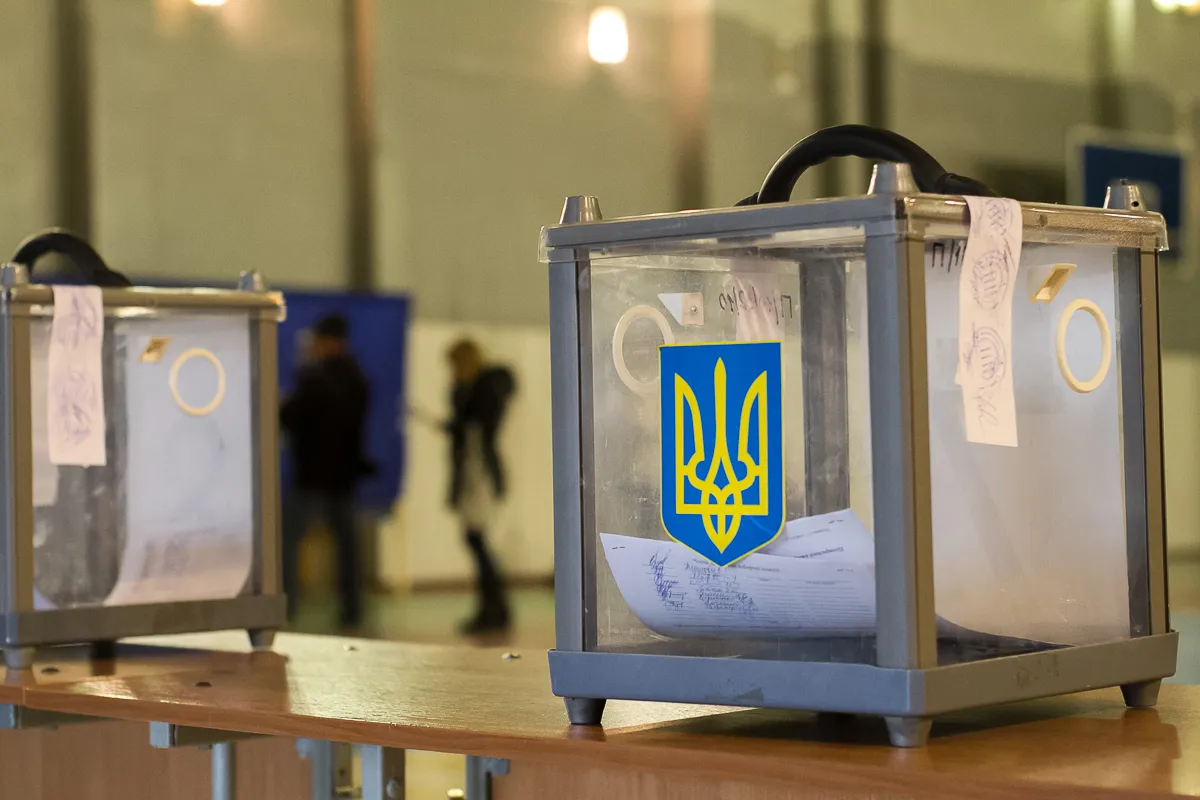
The legal aspect is that the period of martial law directly blocks elections. The Electoral Code provides for the start of an election campaign only after martial law is lifted. The organizational dimension is no less complex. Damaged infrastructure, millions of citizens abroad, part of the territory under occupation, and a large number of voters at the front all of this creates a problem of legitimacy and equal participation. Political scientist Volodymyr Fesenko emphasizes that even in the event of a peace agreement, it is impossible to hold proper elections in 60 days. According to experts and representatives of the Central Election Commission, preparing post-war elections requires at least six months after the end of martial law.
A referendum together with elections: political logic and risks
The idea of combining presidential elections with a referendum on a peace agreement looks like an attempt to secure public legitimacy for difficult decisions. However, it depends on one basic condition: the existence of the agreement itself. Fesenko states directly that if there is no peace agreement, there will be no subject for a referendum. And if hostilities do not stop, it will be impossible to hold either elections or a vote on a peace plan. An additional factor is skepticism about online voting. Both the expert and political communities treat this idea critically, given the risks of cyberattacks and external interference.
Are elections possible in the near future
Taking into account all statements and positions, three key prerequisites for elections can be identified:
- A cessation of hostilities and stable security guarantees.
- The lifting of martial law.
- At least several months of preparation, with updates to legislation and infrastructure.
None of these conditions is currently met. The realistic scenario discussed by experts is that negotiations may drag on, and the territorial issue will remain a sticking point. Under such developments, the political calendar is automatically pushed back.
The public debate about May elections looks like a mix of diplomatic signals, domestic political assumptions, and media resonance. At the same time, legal norms, the security situation, and the technical unpreparedness of the state create a clear constraint. From the standpoint of political analysis, holding elections during an active phase of war is unlikely and systemically dangerous. Without a cessation of hostilities and the end of martial law, any election campaign will not be able to meet the standards of free and fair expression of the people’s will. Therefore, elections in the near term look like an unrealistic scenario. The question of holding them depends directly not on political statements, but on the security situation and the real outcomes of negotiations. As long as the war continues, political stability remains the priority, and the election process remains a postponed decision.
About the Author

Related posts:
 Post-War Elections in Ukraine: Why a New Law Is Needed and How Parliament Is Preparing for It
  Elections and Peace Talks: How Ukraine’s Political Landscape is Changing
  Continuity of Local Government During Wartime: An Analysis of the Verkhovna Rada Resolution
  The Electric Vehicle Market in Ukraine: Growth Amid War and What Is Holding Back Infrastructure Development