The Arctic Without a Periphery: How Greenland, Svalbard, and Northern Canada Are Becoming New Flashpoints
The Arctic is increasingly no longer perceived as a distant and neutral space. Against the backdrop of escalating discussions around Greenland, it is becoming ever clearer that this is not about a single island, but about a reconfiguration of northern geopolitics as a whole. Interest in the region from the United States, Russia, and China is growing rapidly, and with it grows tension in other Arctic areas that have not yet become “hot spots”, but have already ceased to be secondary.
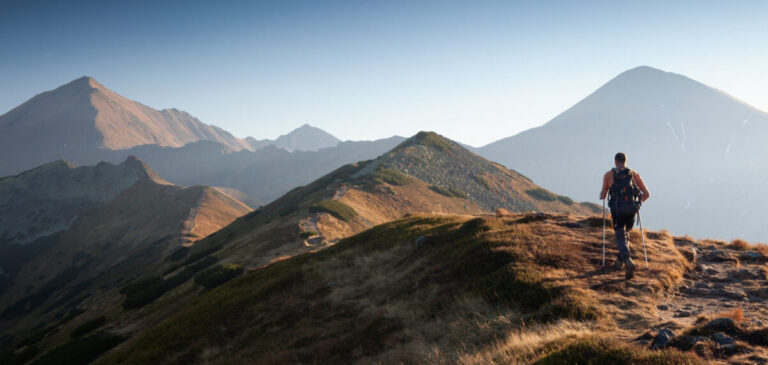
One of these areas is Svalbard, also known as Spitsbergen. The archipelago lies far beyond the Arctic Circle and has a unique international legal status закреплений by the Svalbard Treaty of 1920. The treaty recognized Norway’s sovereignty while simultaneously banning any military activity and granting all signatories equal rights to economic activity and land ownership. It is precisely this uniqueness that today is turning into vulnerability. After public discussions intensified about possible US control over Greenland, concerns emerged in Norway about risks to Svalbard as well. The opposition directly links these discussions to the growing activity of Russia and China in the Arctic and to the fact that Russia already has a presence on the archipelago, while the Russian Federation itself is geographically close. According to this logic, this could shape American thinking toward a desire to gain control over the archipelago as well. The leader of Norway’s SV party, Kirsti Bergstø, appealed to Prime Minister Jonas Gahr Støre to inform parliament about the situation surrounding Svalbard. As analysts note, the century-old treaty that opened Svalbard to many countries “made the ice-covered archipelago vulnerable to interference by Russia and China”, which is why Norway is now strengthening control over the territory more decisively than ever before. Investigative journalism supports this assessment.
“For decades, researchers from around the world came to a scientific station on Svalbard, located on a dramatic fjord surrounded by sharp, tooth-like mountains. Chinese students raced snowmobiles alongside European colleagues. Norwegians and Russians held chess tournaments and shared borscht after matches,” wrote The New York Times.
“But today, Norway is asserting its sovereignty over Svalbard more forcefully and pushing back against foreign influence. It has stripped foreigners of voting rights. It has blocked the sale of land to foreigners. It has restricted foreign researchers and asserted rights to the seabed hundreds of miles out,” the newspaper noted.
Svalbard has not only symbolic but also practical significance. It is one of the best locations in the world for downloading satellite data and tracking missile flight trajectories. In addition, the islands and the surrounding seabed contain deposits of rare earth minerals that are critical for batteries, electric vehicles, and solar panels.
“Whoever controls Svalbard gains a platform for dominance in the Arctic, which is becoming increasingly important to the security of Europe, North America, and Asia,” The New York Times emphasizes.
The newspaper also notes that American officials accuse Chinese researchers of conducting illegal military research there, while Russian claims on Svalbard increasingly resemble the language Moscow uses when asserting claims over Ukraine.
Russia’s presence on the archipelago has a long history. There are still two “Russian” settlements there, created during Soviet times for coal mining. The economic logic was weak coal was expensive and difficult to transport but the political presence was considered strategically important. During the Soviet era, Ukrainian miners from Donbas also worked on Svalbard on a rotational basis. This practice continued for some time even after Ukraine gained independence.
Additional nervousness was injected into the discussion by Croatian President Milan Milanović, who jokingly suggested Svalbard as an alternative to Greenland.
“I don’t know if the American administration has seen it on the map, but Svalbard exists. It is located a bit east of Greenland. I am giving food for thought,” he was quoted as saying on X. At the same time, attention has also turned to Iceland. Formally, it is a sovereign state and a NATO member without its own army, but with a US military base on its territory. Against the backdrop of tensions around Greenland, a joke by US ambassadorial nominee to Reykjavík Billy Long about Iceland becoming the “52nd state of the United States” caused a strong reaction.
Iceland’s Ministry of Foreign Affairs demanded explanations, and Long was forced to apologize.
“If anyone was offended, I apologize,” he said in an interview with Arctic Today.
At the same time, as Politico reports, a petition emerged in Iceland calling on Foreign Minister Þórdís Kolbrún Reykfjörð Gylfadóttir to reject Long’s nomination.
“These words by Billy Long, whom Donald Trump nominated as ambassador to Iceland, may have been spoken quietly, but they are offensive to Iceland and Icelanders, who had to fight for their freedom and have always been friends of the United States,” the petition states.
Politico also notes that these comments came against the backdrop of NATO allies being shaken by repeated threats from Donald Trump to take control of Greenland, which heightened sensitivity around the issue. Another area of tension is northern Canada. According to NBC News, the US president has increasingly focused on Canada’s vulnerability in the Arctic to Russia and China and insists that Ottawa spend more on defense as a NATO member.
“The president’s growing private fixation on Canada… has emerged as he turns long-standing criticism of America’s neighbors in the Western Hemisphere into actions aimed at expanding US power in the region,” NBC News writes.
Post List




Privately, US officials acknowledge that US control over Greenland would also benefit Canada.
“Ultimately, this is all aimed at stopping Russia and China from expanding their presence in the Arctic. Canada would benefit from US ownership of Greenland,” one administration official told the network. At the same time, demonstrations supporting Greenland’s sovereignty have taken place in Canada’s Arctic regions. In the city of Iqaluit, about 70 people marched with signs in solidarity with Greenlanders.
“Braving subzero temperatures, they marched and carried signs proclaiming support for Greenland’s sovereignty,” reported Canada’s public broadcaster CBC.
Canadian Inuit leader Natan Obed said the Canadian government must pay greater attention to Inuit Nunangat, the historical homeland of Canada’s Inuit, including through increased investment in maritime and aviation infrastructure. This issue is directly linked to security and state presence in the Arctic. At the same time, US officials stress that there are no plans to deploy American troops on Canada’s northern border or to “purchase” the country. But even without such scenarios, the rhetoric and concentration of attention on the North have already changed the rules of the game. The Arctic is no longer a geographical periphery. It is becoming a space where security, resources, and global influence intersect. Greenland merely opened this discussion. Svalbard, Iceland, and northern Canada show that the struggle for the Arctic has already begun even if, for now, without gunfire.
About the Author

Related posts:
 What Really Lies Behind Trump’s Threats to Europe Over Greenland
  The Greenland conflict and the disrupted agreements on Ukraine’s reconstruction in Davos
  China, Russia, and the New Global Balance: What “Unacceptability of Russian Defeat”
  The Global Economy in 2026: Growth Driven by a Technology Boom and Hidden Risks