Selling 25% of Energoatom: what the stake could be worth and who could buy it during the war
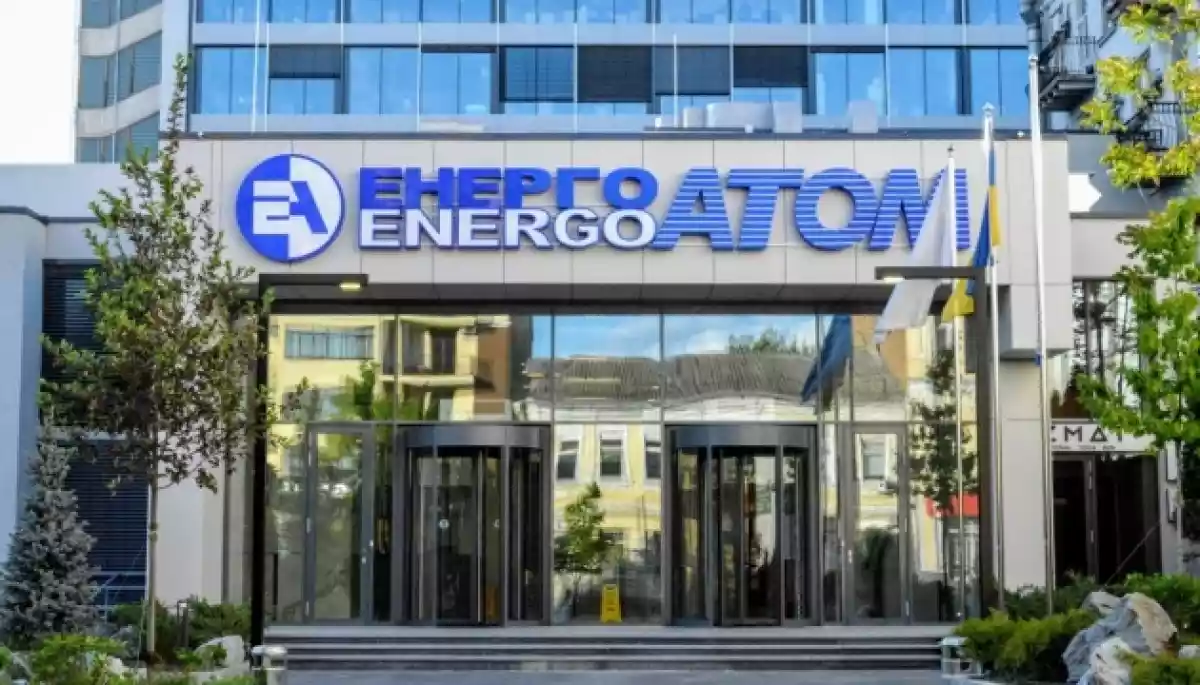
During the World Economic Forum in Davos, the Ukrainian government for the first time publicly allowed the possibility of selling 25% of the state-owned company NAEC Energoatom. This is not about privatization in the classical sense, but about a minority stake without the loss of state control. Formally, it is an instrument for attracting funds. In practice, it is a test of investors’ willingness to invest in Ukrainian strategic assets during the war.
The statement was made against the backdrop of negotiations with major international players and discussions on financing post-war recovery. At the same time, expert assessments show that the current price of Energoatom is shaped largely not by the company’s economics, but by the war, regulatory constraints, and political risks.
How much a quarter of Energoatom costs
Investment experts agree on the main point: selling 25% of the company could potentially bring $1.5–2.5 billion, but under current conditions this is far from the upper limit.
Oleksandr Parashchii, Head of the Analytical Department at Concorde Capital, estimates a 25% stake in Energoatom at $1.5–2.5 billion. An important clarification: this amount does not include the occupied Zaporizhzhia Nuclear Power Plant. If its return under Ukrainian control is assumed, the value of the asset, according to him, could double. A similar position is expressed by Vadym Khrystoforov, Investment Director at Altius Capital. According to his calculations, over the past 12 months Energoatom’s operating income amounted to UAH 32.3 billion, while EBITDA reached UAH 49.2 billion. With such financial indicators and relatively low debt, the fair value of the business in a stable jurisdiction could reach $11.7–15.6 billion.
However, the war changes everything. Due to the so-called “Ukrainian discount,” the expert lowers the company’s valuation to $6.5–8.7 billion, and the 25% stake to $1.6–2.2 billion. This assessment also excludes the Zaporizhzhia NPP, which has an installed capacity of 6 GW out of Energoatom’s total 13.835 GW. If its full operation under Ukrainian control is restored, the valuation of a 25% stake could rise to $2.9–3.9 billion. In fact, almost half of Energoatom’s potential value is currently frozen by the war.
Regulatory constraints as a key factor of devaluation
The price of the company is pressured not only by the occupation of part of its assets. One of the main restraining factors is the public service obligations (PSO) imposed on Energoatom. The company is forced to compensate preferential electricity tariffs for households, which systematically reduces its profitability.
According to experts, the cancellation or revision of PSO could multiply the company’s market value. However, this is a politically sensitive issue directly linked to tariff policy and the state’s social obligations.
Against this background, the high-profile corruption case uncovered by NABU in November 2025 has virtually no impact on investor valuations. Both Parashchii and Khrystoforov directly state that the market is not focused on individual cases, but on cash flows, the regulatory environment, and the long-term business model.
Who could become a buyer
Despite wartime risks, experts are convinced that interest in such an asset will exist. However, these are unlikely to be classical industrial players in nuclear energy. Minister of Economy, Environment and Agriculture Oleksii Sobolev openly acknowledged that major European nuclear companies currently face their own difficulties, and that entering a Ukrainian asset requires a separate agreement at the EU level.
Instead, more realistic candidates include:
- institutional investors, such as large investment and pension funds from the US and the EU;
- international financial institutions, including the IFC within the World Bank Group, the US DFC, and the EBRD;
- participation within broader intergovernmental agreements related to Ukraine’s recovery.
In this context, negotiations held by the Ukrainian delegation in Davos with representatives of BlackRock do not appear accidental. These meetings were reported by the Secretary of the National Security and Defense Council, Rustem Umerov, who emphasized that discussions focused on economic development, recovery, and security guarantees.
At the same time, reality must be acknowledged. Bloomberg previously reported that BlackRock stopped working on the creation of a multibillion-dollar Ukraine recovery fund back in early 2025 due to changes in the political context in the US after Donald Trump’s victory. In addition, the announced $800 billion post-war reconstruction agreement was never signed in Davos. This means that contacts exist, but financial commitments do not at least for now.


Political and economic balance
The government’s logic is clear: war requires resources, and domestic capacities are limited. Oleksii Sobolev emphasizes the expansion of the legal economy and growth in tax revenues, noting that the state already redistributes about 50% of GDP. In this sense, the sale of a stake in Energoatom looks like an additional, not a core, financing instrument.
At the same time, a key question of timing arises. Selling during the war means a maximum discount and the loss of part of the asset’s potential value. Waiting for the de-occupation of the Zaporizhzhia NPP and a reduction in risks could significantly increase the price, but without any guarantees on timing.
What is really at stake
The story of a possible sale of 25% of Energoatom is not only about numbers. It is a choice between short-term financing needs and the long-term value of a strategic asset. The company demonstrates strong financial performance even under wartime conditions, but is being sold in an environment where price is determined not by efficiency, but by risk.
For investors, this is an opportunity to enter an asset with significant growth potential. For the state, it is a difficult decision whose consequences will be felt for many years. That is why the issue of selling a stake in Energoatom goes far beyond an ordinary transaction and becomes a marker of how Ukraine balances survival today with development tomorrow.
About the Author

Related posts:
 How the War Changed the EU Gas Market: The End of Oil Indexation and Gazprom’s Strategic Failure
  Lithium Under Siege: How Russia Is Exploiting Ukraine’s Strategic Vulnerabilities
  Kharkiv under Fire, Moscow in Flames: Why This Is Not Escalation — but Strategic Response
  Birsulivske and Likarivske Deposits: How Ukraine Is Launching Its First Strategic Investment Projects with the US