Kyiv Energy System Under Attack: Why the Capital Is Again Without Power and When Recovery Is Possible
The massive strike on January 20 once again pushed Kyiv into survival mode. Thousands of buildings were left without heat, water, and electricity, the metro is operating with changes, and instead of predictable outage schedules the city is back to emergency blackouts. This is not a sudden collapse and not a coincidence. It is a targeted attack on key elements of the energy system that sustain the capital.
The Russian attack targeted not only generation facilities but substations that withdraw power from nuclear power plants and transmit it to urban networks. As a result, energy operators were forced to unload one of the NPP units. This technical decision is necessary for safety, but it automatically reduces the amount of available electricity. That is why Kyiv, which could have returned to scheduled outages already this week, was pushed back into emergency blackouts. The problem is not a lack of generation as such, but damage to transmission and distribution infrastructure.
Two expert views and what they share
Experts do not disagree on the causes, but they differ on timing. One view follows technical logic: if power supply from substations is restored quickly and there are no new strikes, Kyiv could return to scheduled outages in the coming days. Strengthened air defense is cited as an additional stabilizing factor. Interception statistics show improved air defense effectiveness, which could lower the risk of repeat damage. The other view is more cautious. The argument is simple: nothing fundamentally has changed. Russian attacks continue, cold weather increases demand, and any new hit to network infrastructure instantly nullifies repair efforts. Under this scenario, emergency blackouts could last for weeks. In essence, the difference between these assessments lies not in the analysis itself, but in the assumption of whether there will be a pause in shelling.
The blackout at the Chornobyl Nuclear Power Plant caused particular concern. For Ukrainians, this is always a sensitive issue and experts believe this is precisely what the enemy is counting on. From a technical standpoint, the situation is not extraordinary. The plant has backup power, generators are operating, and fuel reserves are sufficient for a prolonged period. Similar incidents have happened before. From the perspective of nuclear safety, this is a zero-level incident, and international partners were informed immediately. In other words, strikes on Chornobyl are aimed less at energy disruption and more at psychological pressure to provoke fear and a sense of instability.



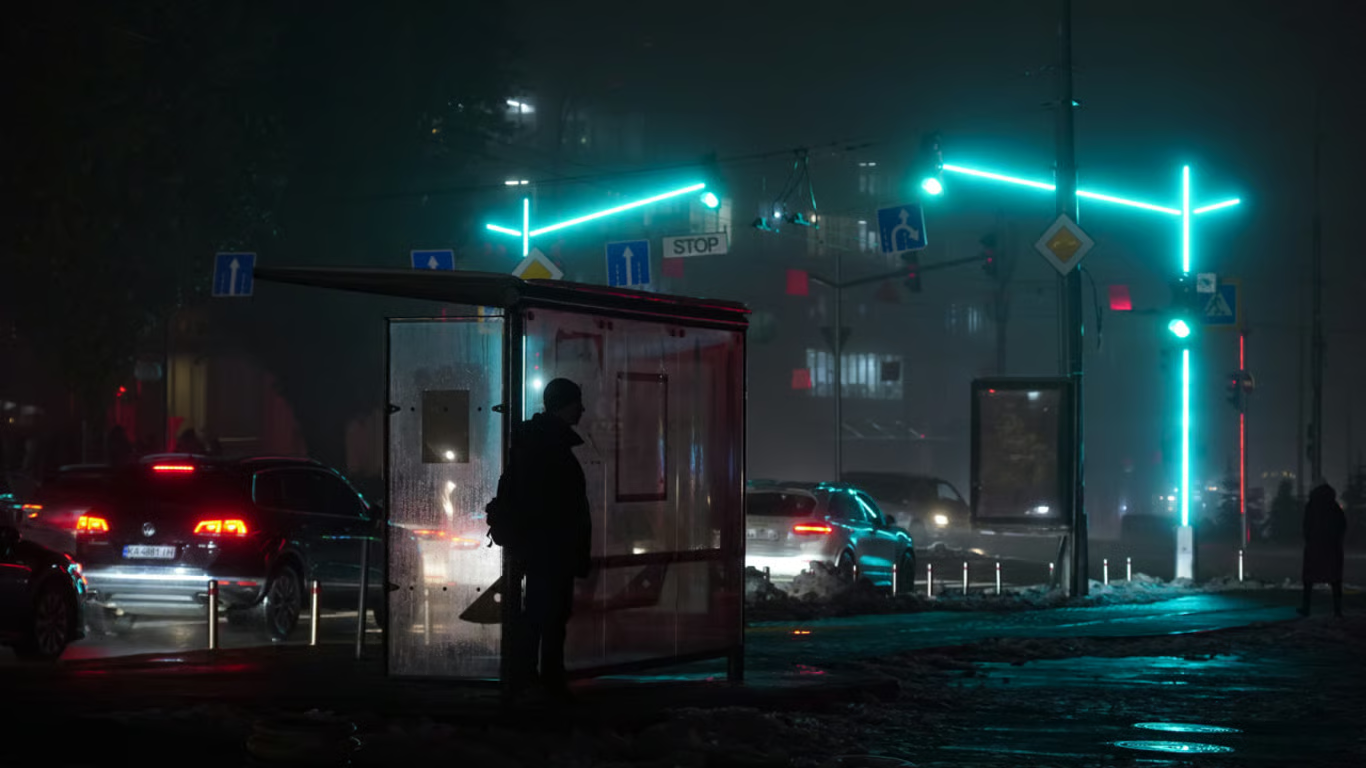
The consequences of the attack are tangible in daily life. Thousands of apartment buildings are without heat, many of them only recently restored after the January 9 strikes. The left bank of the capital is experiencing water supply disruptions. Social infrastructure facilities are operating on autonomous power. The metro has adjusted its schedules, lines are running with limitations, and information must be updated in real time. This once again shows how a мегаполіс’s energy system depends on a small number of critical nodes.
The key conclusion is simple and uncomfortable: the return of Kyiv to normal life is not determined by energy factors alone. It directly depends on the military situation. Energy workers can repair, reroute, and optimize. Authorities can reallocate resources. But every new strike on substations pushes the system back again. That is why even the most precise forecasts today remain conditional.
Time for Action analyzed the available information and concludes: Kyiv is living in a war for its energy system, where stability is not a state but a brief window between attacks. A return to scheduled outages is possible, but only if the intensity of strikes decreases and effective air defense is maintained. Until then, the capital must adapt. And the key point to understand is this: today’s blackouts are not a malfunction or a management failure. They are a direct consequence of war a war fought not only for territory, but for the city’s ability to live a normal life.
About the Author

Related posts:
 Energy Terror and the Country’s Response: Anatomy of the Massive Attack on Kyiv and Ukraine
  Energy Terror as a Strategy: What the Massive Attack of December 27 Revealed
  Ukraine, Winter, and Electricity: Is the Energy Sector Ready to Withstand Attacks?
  New Names in Kyiv’s Urban Space: How the Capital Shapes Memory Through Public Squares