Shah Instead of Kopeck: What the NBU Initiative Means and How the Transition Will Work
The idea of replacing the name of the fractional coin “kopeck” with “shah” was first publicly voiced in the autumn of 2024. The National Bank explained the initiative as part of the derusification of monetary circulation and a return to national tradition. From the very beginning, the proposal provoked mixed reactions: some perceived it as a logical step in breaking with Russia’s legacy, while others viewed it as a symbolic gesture with no practical value. At the end of 2025, the issue resurfaced after the Verkhovna Rada supported the relevant draft law in its first reading with 264 votes. This shifted the discussion from the level of an abstract idea to that of a potential decision that could be implemented in the near future.
After the collapse of the USSR, Ukraine used karbovanets in circulation until 1996, replacing Soviet rubles. In September 1996, as part of a monetary reform, the state introduced the hryvnia as the national currency and its hundredth part the kopeck. At the same time, the National Bank began issuing banknotes and coins in denominations familiar to the post-Soviet space. The choice of the name “kopeck” was not accidental. It had been used for decades in the monetary systems of the Russian Empire, the USSR, and most post-Soviet countries. Today, however, this very continuity has become the reason for reconsideration.
Why “Shah”
The National Bank insists that “shah” is not an innovation, but a return to an authentic Ukrainian monetary tradition. In various historical periods, including the era of the Hetmanate and the Ukrainian Revolution starting in 1918, this name was officially used to denote a small coin on the territory of Ukraine. The argument also rests on linguistic evidence. The word “shah” is widely present in Ukrainian proverbs and classical literature of the nineteenth and early twentieth centuries. Its active use is recorded in the works of Shevchenko, Kotliarevsky, Lesia Ukrainka, Nechui-Levytskyi, and other authors. By contrast, “kopeck” has a clearly Russian origin, derived from the word “kopyo” (spear), referencing the imagery of coins of the Moscow Tsardom depicting a horseman with a spear. After Ukrainian lands became part of the Russian Empire, the name “shah” was gradually pushed out of official use.
After independence, the idea of restoring “shah” was discussed as early as 1991-1992. At that time, designs for coins with this name were even developed. However, the political reality of the period played a decisive role: the parliament was dominated by forces with a Soviet worldview, and the Verkhovna Rada approved the name “kopeck,” typical of the monetary system of the USSR. As a result, Ukraine remained among the few post-Soviet entities where the kopeck continued to exist in monetary circulation. Today, it is used only in Ukraine, Russia, Belarus, and the unrecognized territory of Transnistria. This fact has become one of the key arguments in favor of renaming.
The Financial Dimension
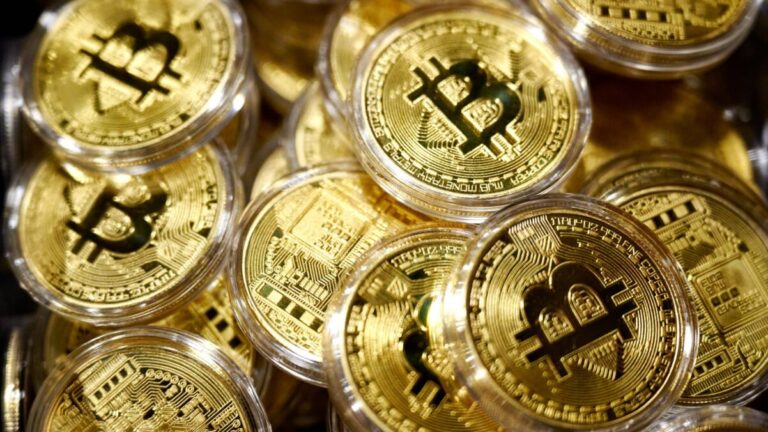
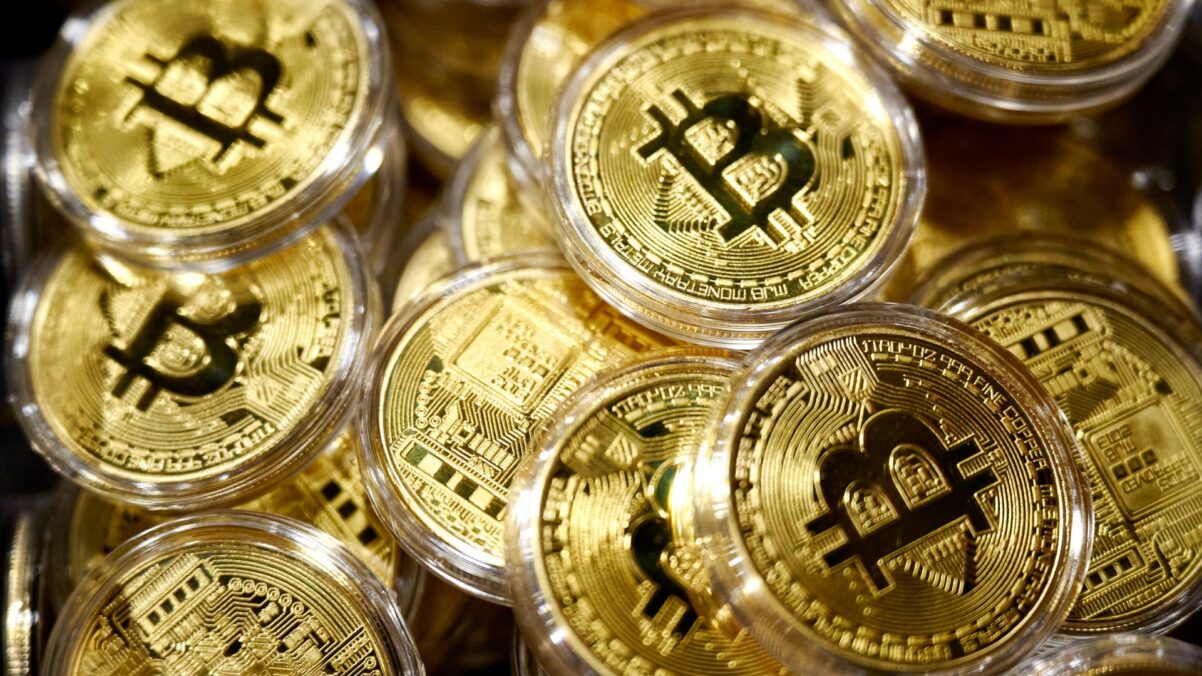
One of the main public concerns relates to possible additional costs for the state. According to data from the National Bank, these fears are not justified. As of early 2026, approximately 5.5 billion fractional coins are in circulation in Ukraine, primarily in denominations of 10 and 50 kopecks. Each year, part of these coins must be re-minted to maintain circulation. The transition to “shah” would take place within this planned process. The key point is this: no additional funding from the state budget is required. Kopecks would be gradually replaced by shahs, without any mandatory exchange and without citizens needing to collect, submit, or swap coins. Both names would coexist for some time, while the value ratio would remain unchanged: 50 kopecks equal 50 shahs.


The draft law has been adopted only in the first reading. The second reading is still ahead and will determine whether “shah” becomes the official fractional coin of Ukraine. Until that moment, the National Bank cannot approve the design or begin minting coins with the new name. Amendments and clarifications are currently being prepared, including legal justification for the transition and technical aspects of issuance. If parliament ultimately supports the law, the transition will be gradual and largely unnoticed in everyday life.
Renaming the kopeck to the shah does not change economic reality: purchasing power, payments, and prices will remain the same. What it does change is the symbolic layer of monetary circulation the one that shapes the connection between the state, history, and language. This decision is not about coins as such. It is about which names and meanings Ukraine chooses to preserve within its institutional system, and which ones it is ready to abandon definitively.
About the Author

Related posts:
 Does Ukraine Need the “Kopiyka”? Why Renaming It to “Shah” Is More Than Symbolism
  Cash in Ukraine: Why It Is Increasing and How the Economy Responds
  Bank Profit 2025: Why Financial Results Declined Despite Rising Revenues
  How Currency Supervision Rules Are Changing: The Joint Initiative of the State Tax Service and the NBU