Language as a Security Issue and Why Ukraine Is Strengthening Its Language Policy
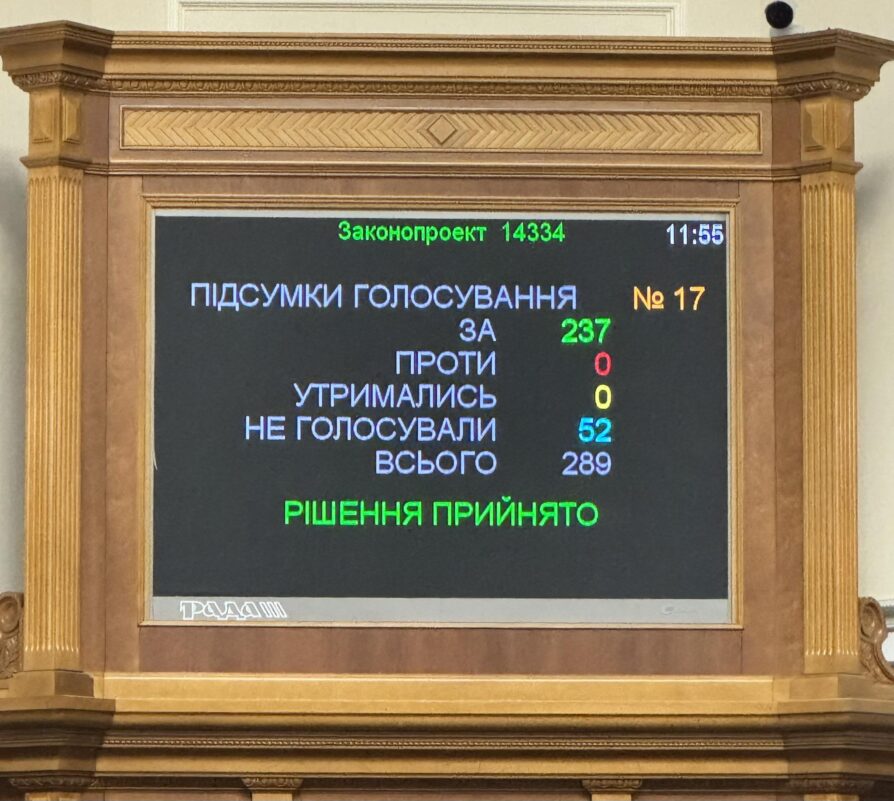
On January 15, the Verkhovna Rada supported a resolution on strengthening the role of the Ukrainian language in affirming the Ukrainian state. The document was backed by 237 members of parliament. Formally, this is not a law and does not introduce new sanctions. But in essence, it is about moving the language issue from the sphere of symbols to the sphere of national security and governance. This is an important moment. Because for the first time in a long while, the state is speaking about language not as a “sensitive topic,” but as infrastructure of statehood, without which law, education, media, and security cannot function. The resolution clearly states:
the affirmation and protection of the Ukrainian language and the formation of a Ukrainian-language environment throughout Ukraine are critically important for national security, state unity, and sustainable development.
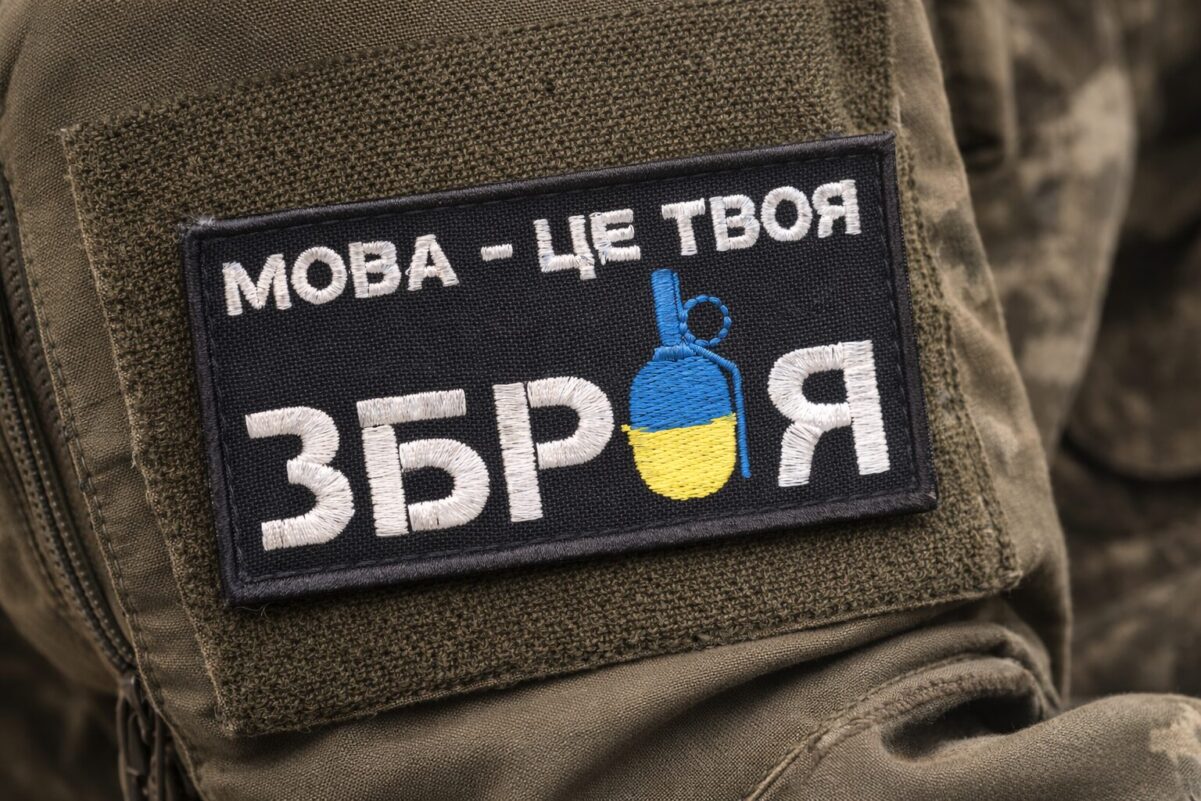
This marks a fundamental shift. Language ceases to be framed as a matter of “personal choice” or “tradition.” It is directly named as an element of security in a war that Russia is waging not only with missiles, but also with meanings, narratives, and habits. The text explicitly notes that decisions must be made regardless of opposition from the aggressor state or any external pressure. In other words, language is no longer treated as a subject for compromise.
One of the key differences between this resolution and many previous statements is the transition to concrete governance tools. The document contains clear recommendations for various institutions, with specific deadlines. Among the key directions:
- updating the Ukrainian Orthography by February 1, 2026, with the involvement of the Institute of the Ukrainian Language of the National Academy of Sciences, as well as academic and educational institutions;
- analysis of the linguistic quality of legislation by the National Academy of Sciences and the National Academy of Legal Sciences, focusing on terms, phrases, and legal language;
- creation of a Unified Glossary of Legal Terms, intended to cleanse regulatory documents of calques, russisms, and bureaucratic jargon;
- a unified font standard for the texts of laws and resolutions, to unify and systematize state documents;
- bringing regulatory and legal acts into compliance with the law on the state language.
This is no longer rhetoric. It is an attempt to put order into the state machinery itself, where language has often remained a weak point.
A separate section of the resolution concerns the media. It speaks about introducing technologies to detect, analyze, and block audio and video content aimed at continuing russification or spreading pro-Russian and anti-Ukrainian narratives. This is a clear acknowledgment that language policy today is inseparable from information security. For years, Russia has used “russo-language” dominance and the ideology of “what difference does it make” as instruments of influence. The resolution effectively states: the state is no longer willing to leave this sphere without oversight.
The statistics of appeals to the Language Ombudsperson are telling. In 2025, 3,122 complaints from citizens were received. The highest numbers came from Kyiv, as well as Odesa, Kharkiv, Dnipropetrovsk, and Kyiv regions. These figures matter not just as data. They show that the language issue remains a zone of everyday tension, especially in large cities. And that public demand for clear rules and a firm state position has not disappeared.
The Language Ombudsperson, Olena Ivanovska, explicitly described the resolution as strategic. According to her, it will contribute to the development of Ukrainian-language media content and the creation of a Unified Glossary of Legal Terms. She emphasized:
“This decision consolidates Ukraine’s strategic course toward protecting linguistic sovereignty, forming a Ukrainian-language space, and strengthening the role of the state language in all spheres of public life. This is a decision that works for the future.”
This formulation matters. Because it is not about a campaign or a one-off vote, but about long-term policy.



At the same time, it is important to be clear: the resolution is advisory in nature. It does not introduce sanctions and does not create automatic enforcement mechanisms. Its effectiveness will depend on whether concrete decisions follow from the government, academies, commissions, and regulators. There is a risk that without political will at the implementation stage, the document will remain a well-formulated framework without real substance.
The adopted resolution is an attempt to move from reactive language protection to a systemic language policy. The state clearly states that the Ukrainian language is not a secondary issue and not a field for compromise, but one of the pillars of statehood in wartime. This decision does not solve the problem instantly. But it sets a framework in which language becomes part of security, legal, and governance logic. And it is precisely on whether this framework is filled with real actions that it will depend whether language policy becomes an instrument of resilience rather than yet another declarative gesture.
About the Author

Related posts:
 Ukrainian Language Everywhere: How the New Commissioner Is Shaping a Modern Language Policy
  How the EU Plans to Restrict Russian Diplomats’ Movement and What It Means for European Security
  Language Matters: Why Words Like “Authoress”, “Editoress” and “Historian (Female)” Matter — and Why the Backlash Is Telling
  When Destruction Is “Not Seen”: An Action Algorithm That Helps the State Regain Its Sight