Energy Emergency in Ukraine: Power Outages, Curfew Rules, and Winter Risks
Ukraine is entering the most difficult phase of winter amid a systemic energy crisis that has long gone beyond a purely technical problem. Massive Russian strikes on infrastructure, prolonged морозs, and the physical exhaustion of networks have forced the state to move from ad-hoc solutions to an emergency regime in the energy sector. This decision is not a formality it acknowledges that standard governance mechanisms are no longer coping with the load. President Volodymyr Zelenskyy convened an emergency meeting and directly outlined the scale of the challenge:
“The consequences of Russian strikes and worsening weather conditions are severe. Repair teams, energy companies, utility services, and the State Emergency Service of Ukraine continue to work around the clock to restore electricity and heating supply.”
This is more than a statement of fact. It is a signal that the country is switching to a survival mode, where every management decision has a direct impact on heating in homes, the functioning of hospitals, transport, and businesses.
The introduction of an emergency regime in the energy sector means centralised control and accelerated decision-making, replacing procedures that in peacetime would require lengthy approvals. A permanent coordination headquarters is being established in Kyiv, and responsibility for supporting communities and addressing practical issues has been assigned to the First Deputy Prime Minister Minister of Energy Denys Shmyhal. Key steps defined as priorities include:
- maximum deregulation of procedures for connecting backup energy equipment;
- intensified cooperation with international partners to obtain equipment and additional support;
- expansion of the network of Points of Resilience and inspection of their readiness;
- revision of how critical services and social infrastructure operate.
The President stressed separately:
“It is important that state institutions, businesses, and all levels of local government work now in a coordinated and unified manner. The common result for the whole country depends on the contribution of each.”
One of the most telling decisions was the instruction to review curfew rules during periods of extremely cold weather. This is not about abolishing restrictions altogether, but about adapting them where the security situation allows. The President defined the task clearly:
“So that people can receive all necessary support at any time and so that businesses can plan their operations more rationally.”
This is an acknowledgment that the curfew has ceased to be solely a security tool. Under conditions of mass power outages, it directly affects:
- access to warming and support points;
- the ability of businesses to organise work shifts;
- the logistics of repair and emergency crews.
At the same time, the legal framework remains contradictory. The Code of Ukraine on Administrative Offences still contains no direct reference to the curfew, even though it has been in force since the beginning of the full-scale war. A bill introducing fines for curfew violations has been submitted, but it has not yet become an effective instrument. This creates additional uncertainty at a time when rules may be adjusted оперативно.
The situation in the capital demonstrates the real scale of the problem. Hundreds of buildings remain without heating, and electricity is insufficient even for critical infrastructure. After the massive attack in early January, stabilisation schedules effectively stopped working, giving way to emergency and unpredictable outages. The uneven nature of restrictions across districts indicates that the issue lies not only in a generation deficit, but also in damage to distribution nodes:
- on the right bank, schemes with five hours of electricity and five hours without are applied;
- on the left bank, outages reach nine to ten consecutive hours;
- in some districts, schedules do not operate at all due to the emergency regime.



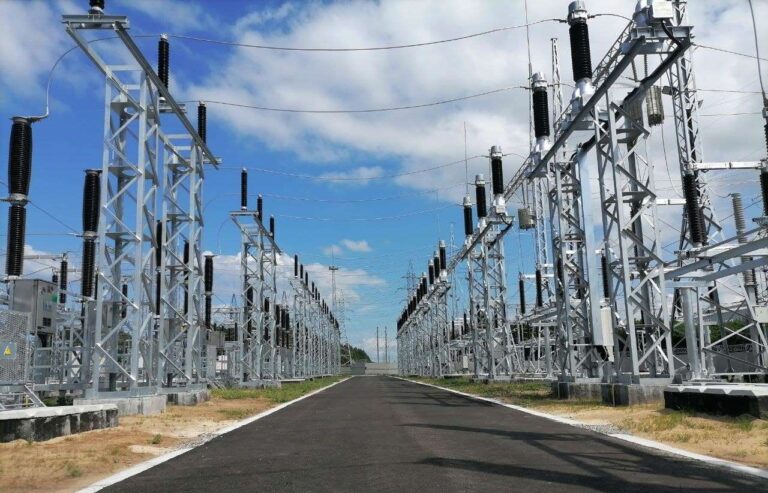
Expert assessments differ in detail, but converge on the main point: this winter represents the peak load on the system. Strikes on CHPs and substations, морозs, widespread use of heaters, and worn-out equipment have all overlapped.
Key factors that will determine the situation in the coming weeks:
- the intensity of Russian attacks;
- air temperature and duration of cold spells;
- the speed of emergency repair works;
- the possibility of returning to predictable schedules.
Even the more optimistic forecasts explicitly warn: any new large-scale attack could negate the results achieved.
The introduction of an emergency regime in the energy sector is not about convenience or political statements. It is about keeping the country functioning during war and severe cold. Government decisions are aimed at minimising consequences rather than eliminating causes, and this is the key limitation of the current reality. In the coming weeks, Ukrainians will have to live with instability, where electricity and heating remain variable values. At the same time, the state effectively acknowledges that the energy system is holding thanks to the work of thousands of people and a reserve of resilience that is gradually being exhausted. That is why energy today is not about tariffs or schedules. It is about the country’s resilience in wartime.
About the Author

Related posts:
 Energy Terror and the Country’s Response: Anatomy of the Massive Attack on Kyiv and Ukraine
  Oil Pressure, New Sanctions, and India’s Energy Choices: How the Global Oil Map Is Shifting Under U.S. Influence
  Energy Terror as a Strategy: What the Massive Attack of December 27 Revealed
  Power Outages in Autumn 2025: How the Energy Sector Changes Under the Pressure of Attacks