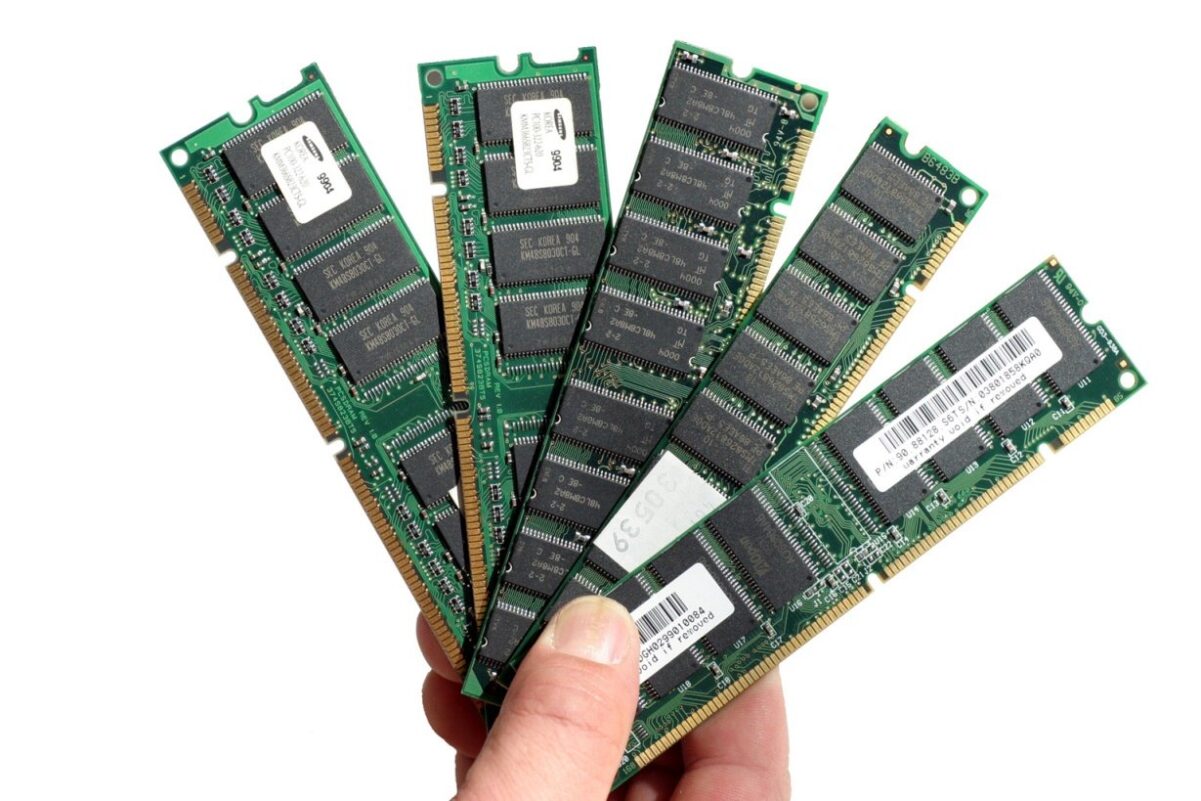
RAM and GPU Prices Are Rising: How the AI Boom Is Reshaping the Hardware Market
In the world of hardware, there is a familiar logic: first the market becomes oversupplied, then manufacturers cut volumes, after that a shortage emerges, and prices jump. This happened during the smartphone boom, during transitions between DDR generations, and during crypto waves that swallowed video cards faster than stores could restock them. But what is happening now with system memory (DRAM/DDR) and graphics processors (GPU) increasingly looks not like another cyclical “overheating”, but like a shift in priorities across the entire industry, where the main customer is no longer the PC buyer or even the gamer, but the AI data center.
This shift is already visible in price tags. For users it looks simple: planned an upgrade you will pay more, thought about building a PC the budget no longer adds up, a business planned server expenses costs must be recalculated. But behind this lies a deeper reality: memory and graphics accelerators are becoming strategic resources, because they determine who will be faster, more stable, and more profitable in the AI race.
The first layer of the problem is demand. Modern AI systems operate in two modes: training large models and daily interaction with millions of user requests, known as inference. Both modes critically depend on GPU clusters, and inside these clusters one of the key bottlenecks is memory its capacity, speed, and ability to move data between components without delays. That is why HBM (High Bandwidth Memory) has become not just “another type of memory”, but a component that defines AI infrastructure performance. Everything that accelerates AI computation automatically becomes more expensive.
The second layer is supply. Memory, chip, and component manufacturers cannot instantly “add production”, even when demand is obvious. Retooling production lines, investing in fabs, switching to new process nodes, and expanding packaging capacity are not quarterly tasks. They take years. And into this time gap enters AI, growing much faster than the industry can respond.
The third layer is margin. Memory for data centers and specialized HBM sells at a higher price and brings greater profit than “ordinary” memory for the mass market. As a result, the logic is harsh but rational: if a factory can produce either a batch of lower-margin products or a batch of higher-margin ones, it will choose the latter. Multiplied by global AI demand, this choice gradually squeezes supply for the consumer segment.
It is precisely at this intersection that the effect emerges which users see in stores as “it got more expensive again”. And it is important to understand: this is not about memory “running out”. It is about free capacity for the mass market no longer being a priority, with production resources allocated differently.
Public market assessments already signal that the situation is not just “tight”, but entering a phase where prices can jump quickly and sharply. One marker is contract prices, meaning large-scale procurement prices that later, with a delay, flow into retail. Forecasts for early 2026 indicate a jump in DRAM contract prices by tens of percent per quarter exactly the kind of signal that usually means prices will not drop quickly, because the market is entering a shortage phase.
Next comes the question of why this became noticeable only now. Here, several factors overlap. First, inventory effects. In memory markets, stockpiles and warehouse reserves can smooth shocks for a time. But when demand grows steadily and manufacturers do not expand output at the same pace, inventories shrink and prices react more sharply. Second, the transition of AI from experimentation to permanent operation. The rollout of agent systems, image and video generation, and business automation means not one-off loads, but constant inference that runs daily and consumes resources without pauses. Third, model evolution. Larger contexts, longer prompts, multi-step reasoning – all of this directly translates into higher demand for memory and accelerators.



Time for Action analyzed verified information from the memory and semiconductor markets, compared public statements by manufacturers and analysts, and the picture converges on one point: AI has become the main driver of demand, and production reorientation toward it the main constraint on supply for the mass segment. This does not mean prices will rise “irreversibly” in a straight line. The tech market always carries a correction scenario – if investor optimism around AI does not materialize, if profitability of mass AI products fails to meet expectations, if some projects are shelved. In that case, demand could cool and prices adjust downward. The real question is how fast this could happen, and whether the consumer segment will have time to wait for such a correction.
A separate focus is GPUs, because a common misconception arises here: that “a video card is about the chip”, and chips are produced at scale. In reality, in modern AI solutions a GPU is a system where the chip, memory, packaging, logistics, and component availability all matter. If memory prices rise, especially high-speed memory, this can push costs up even when the GPU chip itself has not increased proportionally.
A telling factor is the scale of AI infrastructure that has already become public. Training modern models can involve clusters with tens of thousands of GPUs of a single class. This is not an enthusiast market, it is an industry. And industry buys ahead, reserves capacity, and pushes weaker buyers to the back of the line. In such a system, the small buyer will always be a lower priority, because they cannot buy millions of units or guarantee long-term contracts.
Energy consumption also enters the picture, often framed as “AI consumes many times more electricity than search”. Public estimates indeed cite ratios of around “ten times more”, but these figures are estimates, not precise measurements for every query and every model. The key point is different: even if exact numbers vary, the trend holds inference and model training create a new baseline demand for energy, cooling, and data center density, which directly reinforces demand for the “right” hardware and the “right” memory.
Now to the core question that concerns people building PCs or planning upgrades: will it really “only get more expensive from here”. Stripping away loud phrasing and sticking to what can be said responsibly, the answer looks like this: in the short term, the market has more reasons for price growth than for decline. AI demand shows no signs of collapsing, production expansion cycles are slow, and reorientation toward high-margin segments continues. This means price stability for consumer memory and components is becoming the exception rather than the rule.
At the same time, caution is needed in wording. Claims about specific future price tags for individual GPU models or about “triple price increases” by a certain date fall into the zone of rumors, speculation, or emotional forecasts. In professional analysis, these can only be mentioned as unconfirmed market talk, not as facts or reliable planning benchmarks.
For business and infrastructure, the conclusion is straightforward and uncomfortable: server resources are becoming systematically more expensive, and this already affects the cost base of digital products. For ordinary users, the conclusion is different: upgrades are no longer a “light option” where adding memory costs relatively little. Planning now looks different it requires thinking ahead and understanding that the most popular components may become more expensive precisely because they are needed not only by you, but by data centers that buy at scales unattainable for the consumer market.
This is, in essence, the main shift of the era: memory and accelerators are no longer secondary “hardware” for users, they are becoming infrastructure resources of the global AI economy. When that happens, market rules change. And a return to the old norm, where consumer memory was always cheap and a video card was just a product with a predictable price, no longer looks like a guaranteed scenario.
“First, the market is gradually running out of memory stock accumulated in 2023–2024. Second, the three largest memory manufacturers have prioritized production of so-called HBM (High Bandwidth Memory) instead of standard consumer DDR5. The reason is simple: HBM is significantly more profitable financially.”
“The rise in DRAM prices has an indirect but extremely powerful connection to AI. Manufacturers Samsung, SK Hynix, and Micron are reorienting production lines toward high-margin, high-bandwidth memory that is critically important for AI servers.” These formulations matter not because they “predict” the future, but because they describe a mechanism that is already operating. And when the mechanism is working, price is simply its reflection in the user’s wallet.
About the Author

Related posts:
 How Emerging Markets Are Reshaping Investment Strategies Amid the AI Boom
  VR Technologies at War: How Ukraine Turned Virtual Reality Into a Survival Tool
  “The Property” by Dana Modan: Memory as an Act of Resistance in the Shadow of October 7 and at the Odesa Film Festival
  Expensive Education 2025: How Rising Tuition Fees Are Reshaping Access to Higher Education in Ukraine