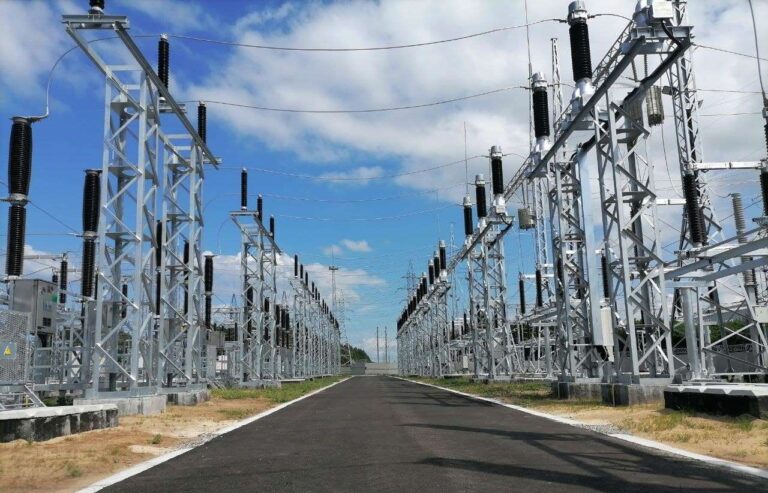
A strike on electricity, heat, and communications: how the January 7 attack exposed a new vulnerability in the energy system of Dnipropetrovsk and Zaporizhzhia regions
On the evening of January 7, Russia carried out another strike on Ukraine’s energy infrastructure and this time the consequences were felt not only through darkened windows. The near-total blackout of the Dnipropetrovsk and Zaporizhzhia regions became a stress test for several systems at once: electricity supply, heating, water, hospitals, communications, and transport, as well as for the ability of local authorities to maintain control during a large-scale regional failure. According to official information, critical infrastructure is operating on backup power, but in these conditions the very concept of “backup” means one thing: the state and cities are functioning not in a mode of comfort, but in a mode of minimum necessary survival.
The essence of this situation is that it cannot be reduced to a power outage as an isolated problem. Electricity is the foundation on which water, heat, hospitals, communications, and transport depend. As soon as power collapses in a region, a chain reaction begins. In some settlements, interruptions in heating and water supply appeared immediately. This is a familiar but dangerous scenario: boiler houses, pumping stations, water supply and drainage systems can operate autonomously only for a limited time and only if resources are available fuel, functioning generators, and crews able to reach repair sites safely.
Dnipro and the surrounding region were hit the hardest. Emergency power outages were reported, as well as damage to a critical infrastructure facility that supplied electricity to most districts of the region. The phrase “the situation is difficult,” used by regional leadership, is not rhetoric it explains why the pace of recovery is directly tied to the security situation. Energy workers cannot operate under all conditions, and this is what fundamentally distinguishes wartime failures from peacetime ones: even when equipment and personnel are available, the actual start of repairs may be delayed if the risks to crews are unacceptable.
At the same time, it is clear how quickly an energy strike turns into a blow to social infrastructure. Due to the lack of electricity in most settlements of the region, school holidays were extended until January 9 inclusive. This decision may seem routine, but it signals something deeper: the education system in the region is adapting not to a short outage lasting a few hours, but to uncertainty. When it is impossible to guarantee electricity, heat, and normal conditions in buildings, the administrative decision to extend holidays becomes a way to reduce risks for children and teachers.
Another marker of the depth of the problem is the absence of forecasts for restoration. When officials publicly state that there are no concrete timelines, this indicates several things at once: the damage may be complex, access to facilities may be limited, and there is a risk of repeated strikes. For residents, this is the hardest informational mode, because without a time horizon it is difficult to plan even the most basic things: water, charging devices, heating, routes, work, care for children and the elderly. Therefore, the recommendation to store water is not “advice just in case,” but a practical indicator: authorities are not confident that water systems everywhere will be able to hold on alternative power for as long as necessary.
At the same time, local authorities in Dnipro demonstrate that some critical decisions in cities have already been automated by experience from previous years. It was reported that all city hospitals have been switched to generators, water reserves are available, medical treatment is not interrupted, and wastewater systems in residential buildings are supported by alternative power sources. A separate and important emphasis is transport. Electric transport collapses first in such situations because it depends on overhead lines and traction substations, so the decision to replace it as much as possible with buses and increase the number of vehicles in operation is an attempt to prevent paralysis of the city. This does not restore normality, but it preserves basic mobility: access to hospitals, aid points, and the work of critical services.
Zaporizhzhia region appears somewhat different in its response logic, though not in the scale of the challenge. In Zaporizhzhia, 120 Points of Invincibility were deployed, and the restoration of voltage at key facilities overnight was reported. This is an important detail: the priority is not “to restore electricity to everyone,” but first to ensure power for critical infrastructure what sustains the city as a functioning system. Generator launches and the connection of cogeneration units continued, while water supply was ensured through alternative power sources. These details show that cities have learned to think not only in terms of generators for individual buildings, but in terms of an integrated “energy – heat – water” contour.
The most vulnerable link in both regions proved to be mobile communications. Due to the large-scale blackout, they switched to emergency mode. Base stations were transferred to batteries with a resource estimated at up to 8 hours, after which generators and fuel are required, the deployment of which depends on coordination between operators and local authorities. Requests for residents to limit mobile phone use unless absolutely necessary are essentially instructions for managing a scarce resource. And the issue is not only everyday comfort. Communications mean emergency calls, coordination of rescue services, alerts about threats, the operation of aid points, and even simple SMS messages, which under network overload may be more stable than mobile internet.
Against this background, it is important that a separate signal of stabilization on heating was voiced in Zaporizhzhia: all boiler houses are supplied with electricity and operating in normal mode, reconnection from generators to central power grids has been completed, and heat supply to homes continues. This does not mean that risks have disappeared, but it does mean that the city has held one of the most painful fronts – heating during winter.
Another dimension of the attack is transport logistics. Ukrainian Railways reported that trains in the Dnipropetrovsk and Zaporizhzhia regions switched to reserve diesel traction, stations are powered by generators, and some services departed with delays under reserve locomotives. Once again, this demonstrates systemic dependence: even when the railway has backup scenarios, an energy failure immediately affects schedules, connections, and the movement of people and goods. In wartime, this is not only a passenger issue it is a matter of stability for logistics chains that sustain the economy and humanitarian processes.



Time for Action analyzed all confirmed information voiced by official bodies and responsible officials, and it leads to one conclusion: strikes on the energy sector have long ceased to be measured only in megawatts, they are measured in the manageability of cities and the ability of systems to quickly switch to autonomous mode. In Dnipro and Zaporizhzhia, this switch took place, but its limits are visible to the naked eye: base station batteries, dependence on security conditions to start repairs, the gap between the need “to restore electricity” and the capacity “to hold the critical line.”
It is indicative that already the next day, January 8, hourly power outages were introduced across Ukraine for households, while power limitations apply to industrial consumers. This underscores the broader context: even when a strike is geographically concentrated, the country’s energy system reacts as a single organism balancing deficits, redistributing load, reducing consumption where possible. This is not a sign of weakness as such, but a sign of operation under constant pressure, where stability is replaced by a regime of controlled limitations.
In the end, the January 7 attack demonstrated three things. First, regional blackouts quickly become a complex crisis, because electricity pulls along heat, water, communications, and transport. Second, the response system has become more experienced: generators, Points of Invincibility, reserve traction, and algorithms for hospitals and transport no longer look improvised. Third, the boundary of resilience lies where reserves run out: in batteries, in fuel, in the ability to safely reach a damaged node, in the capacity to give people not only the “fact of an outage,” but a time horizon. And it is precisely this boundary that is the most sensitive. Because when people lose not only electricity, but also predictability, the country pays an additional price that does not appear in briefings, but is felt every day by millions.
About the Author

Related posts:
 How to Prepare Your Home for Winter and Blackouts: A Proven Guide for Those Who Want to Keep Warm, Stay Lit, and Remain Calm
  Coordination Communications Headquarters: How Ukraine Is Changing Its Approach to Resilient Connectivity During Wartime
  Energy War: Why Russia Keeps Targeting Ukraine’s Infrastructure
  Energy Terror and the Country’s Response: Anatomy of the Massive Attack on Kyiv and Ukraine