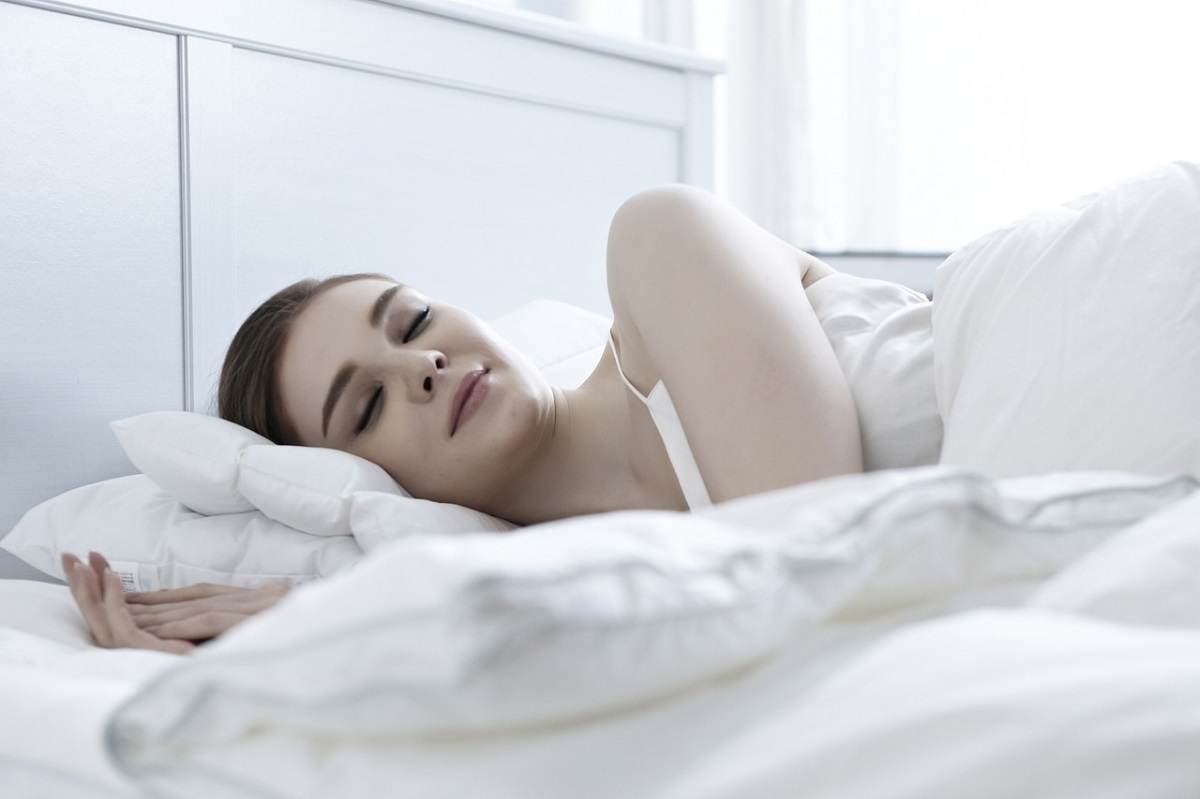
Women Sleeping Separately as a Right to Recovery: Why Sleeping Alone Can Be Healthier
Time for Action analyzed how shared sleep affects women’s recovery quality, and why for many women a separate bed or a separate bedroom is not a whim and not a threat to relationships, but a physiological necessity. Society still holds the belief that sleeping together is a mandatory sign of intimacy, while separate sleep is something cold or wrong. But when this issue is examined without romantic idealization and from the perspective of health and nervous system function, the picture looks different. For a woman, sleep is not just rest. It is a key mechanism for hormonal balance restoration, emotional stability, cognitive functioning, and the ability to withstand daily load. And it is precisely women’s sleep that turns out to be significantly more sensitive to external factors than men’s. This is not about weakness, but about a different sleep architecture and brain function. During studies in which heterosexual couples were observed for nearly a month in everyday living conditions, an important pattern was recorded. When women regularly slept in the same bed with men, the quality of their sleep declined, even if they subjectively did not feel nighttime awakenings. The reason lies not in the number of hours, but in the disruption of the deep sleep phase. This phase is responsible for full physical and neurological recovery.
The key factor was micro-awakenings. These are short, almost imperceptible brain reactions to a partner’s movements, changes in breathing, turning, touches, or sounds. A woman may not fully wake up and may not even remember nighttime disruptions, but her nervous system repeatedly exits deep sleep throughout the night. As a result, the morning begins without a sense of rest, and the day is accompanied by fatigue, reduced concentration, and internal tension. Interestingly, men showed a different pattern under the same conditions. Their sleep either did not worsen or became more stable. After nights of shared sleep, men demonstrated lower stress levels and better cognitive performance. It is also important that sexual activity before sleep did not affect the results. Intimacy did not compensate for the loss of deep sleep in women and did not change the overall trend. The explanation for this phenomenon lies in neurophysiology. The female brain during sleep remains more alert. It reacts faster to potential stimuli and exits deep sleep more easily. This is linked to evolutionary mechanisms formed over centuries: a woman, as a bearer and protector of offspring, needed the ability to respond to threats even at night. In the modern world, this mechanism often works not in favor of women, but against them.
A separate and serious issue is snoring, which statistically occurs significantly more often in men. Women who regularly sleep next to snoring partners are far more likely to experience chronic sleep disruption and insomnia. Chronic sleep deprivation, in turn, is directly associated with an increased risk of hypertension, metabolic disorders, depressive conditions, and an overall decline in quality of life. This is not a matter of comfort – it is a matter of long-term health consequences.
Post List




An important clarification that is often overlooked: science does not claim that shared sleep is harmful to all women without exception. But it clearly shows that women’s sleep is more vulnerable, and that for a significant proportion of women, regularly sleeping in the same bed can be a factor of constant, though unnoticed, exhaustion. That is why the idea of separate sleep is not radical. It is an adaptation to reality, where women already carry significant physical and emotional burdens.
A feminist perspective in this issue is not about opposing genders, but about recognizing a woman’s right to recovery. Sleep is a basic physiological need, not a service meant to support someone else’s comfort. When a woman spends years sleeping in fragments, living in a state of constant fatigue, compensating with caffeine, willpower, and emotional discipline, the consequences eventually become systemic. Society has grown accustomed to perceiving this as “normal” instead of asking the essential question: what about her recovery.
Separate sleep in this context is not about distance and not about relationship crisis. It is about protecting a resourcewithout which intimacy, stability, and emotional presence are impossible. The experience of many women shows that after switching to separate sleep, chronic exhaustion disappears, mental clarity increases, and emotional stability improves. And paradoxically, this often improves the relationship itself. The conclusion here is simple and fundamental. If a woman feels that sleeping separately is better for her, that alone is sufficient reason to seriously consider such a decision. Sleep is not a test of love and does not have to conform to romantic templates. It is a space where the body must recover. And a woman has the full right to choose the format in which her health and quality of life are not sacrificed to habit or expectations.
About the Author

Related posts:
 Sleep or Workout: What’s Actually Better for You and Why the Answer Isn’t That Simple
  $2.5 Billion for Women: How the Bill & Melinda Gates Foundation Is Changing the Approach to Women’s Health
  Can You Live a Nighttime Lifestyle and Stay Healthy? Myths, Science, and the Reality of War-Time Ukraine
  Lucid Dreaming: How Science Discovered a Third State of Brain Activity