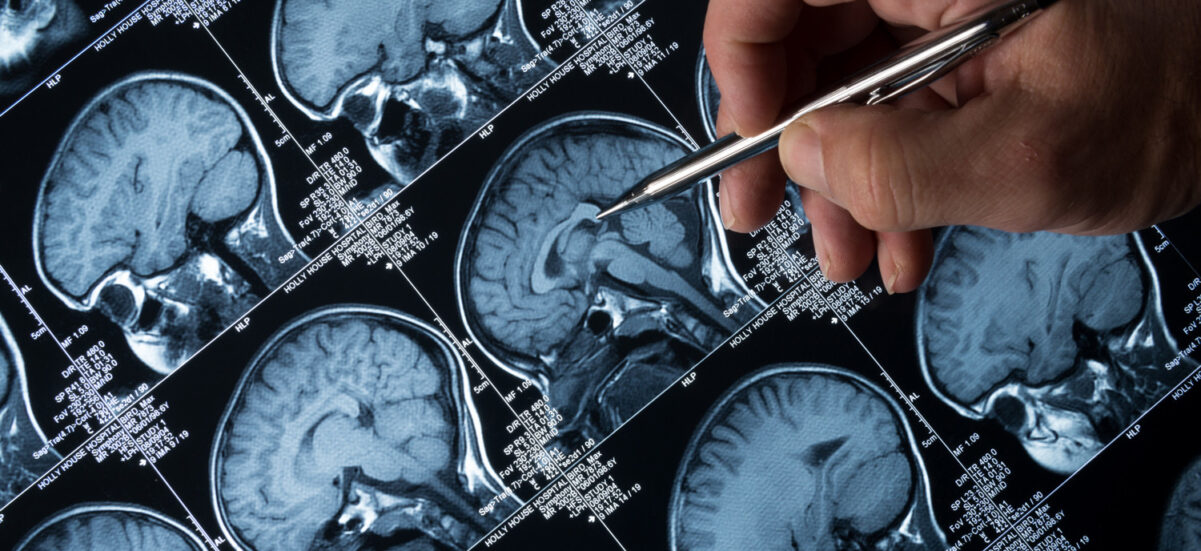
Lucid Dreaming as a Third Brain State: What Modern Neuroscience Has Discovered and Why It Changes Our Understanding of Consciousness
Time for Action analyzed contemporary neurophysiological studies focused on lucid dreaming and reached a clear conclusion: this is not an exotic phenomenon or a psychological trick, but a distinct, measurable brain state that does not fit into the classical dichotomy of “sleep or wakefulness”. For decades, neuroscience relied on a simplified model: the brain is either awake or asleep, with sleep divided into non-REM and REM phases. Lucid dreaming was long considered either a subjective illusion or a variant of REM sleep with increased vividness. However, new electroencephalography data tell a different story.
Recent studies, particularly large-scale work from 2024-2025 using multichannel EEG and functional connectivity analysis, demonstrate that lucid dreaming represents a hybrid state of consciousness with clear physiological differences from both ordinary REM sleep and wakefulness.
Previously, the model was straightforward. Wakefulness is characterized by dominant alpha and beta rhythms, high coherence between frontal and parietal regions, and active prefrontal cortex function responsible for self-control, planning, and reflection. REM sleep, by contrast, involves reduced prefrontal activity, fragmented coherence, and dominance of theta rhythms, which explains the vivid imagery but weak control and critical thinking in ordinary dreams.
New data reveal a third configuration. During lucid dreaming, the brain remains in REM sleep in terms of bodily and autonomic markers, yet simultaneously shows partial restoration of cortical control typical of wakefulness. EEG recordings consistently show increased activity in the gamma band (around 40 Hz), particularly in frontal and frontolateral cortical regions. These areas are directly associated with self-awareness, metacognition, and the ability to recognize one’s own mental state.
Crucially, researchers are not limited to measuring wave power alone. Functional connectivity analysis shows that coherence between different brain regions during lucid dreaming is significantly higher than in ordinary REM sleep, and in some frequency bands approaches wakefulness levels. This indicates that the brain is not simply “dreaming more vividly”, but shifts into a different organization of neural networks.
As a result, neuroscience today operates with three states:
wakefulness, with full control and reflection;
ordinary sleep (REM), with imagery but no control;
and lucid dreaming, where dream imagery coexists with cognitive mechanisms of wakefulness.
It is essential that this state is not random. Research demonstrates that lucid dreams can occur following training, autosuggestion, or cognitive preparation, and that the brain then exhibits reproducible, stable electrophysiological patterns. This undermines the idea of lucid dreaming as something mystical or uncontrollable.



From a neuroscientific perspective, lucid dreaming has become a unique model for studying the nature of consciousness. Previously, self-awareness was thought impossible without full brain awakening. Now we see that consciousness can exist in a partially activated brain, without bodily movement or external sensory input, yet with a clear internal sense of “I am aware that I am aware”.
This discovery has implications far beyond sleep research. It reshapes approaches to studying dissociative states, coma, minimal consciousness, post-traumatic disorders, and raises new questions about how the brain integrates the sense of self and control under different physiological conditions.
Time for Action emphasizes: what we are witnessing is not a social media trend or a reinterpretation of old theories, but a slow yet fundamental shift in the neuroscientific worldview. Lucid dreaming is no longer a curiosity it is becoming a full-fledged third brain state, already supported by clear physiological evidence and holding practical significance for the science of consciousness.
About the Author

Related posts:
 Can You Live a Nighttime Lifestyle and Stay Healthy? Myths, Science, and the Reality of War-Time Ukraine
  Sleep or Workout: What’s Actually Better for You and Why the Answer Isn’t That Simple
  How Artificial Intelligence Discovered Over 12,000 Potential Antibiotics in Ancient Microbes
  Organoid Intelligence: Scientific Frontier or the Beginning of a New Era in Artificial Minds?