VR technologies at war: how virtual reality stopped being a toy and became a survival tool
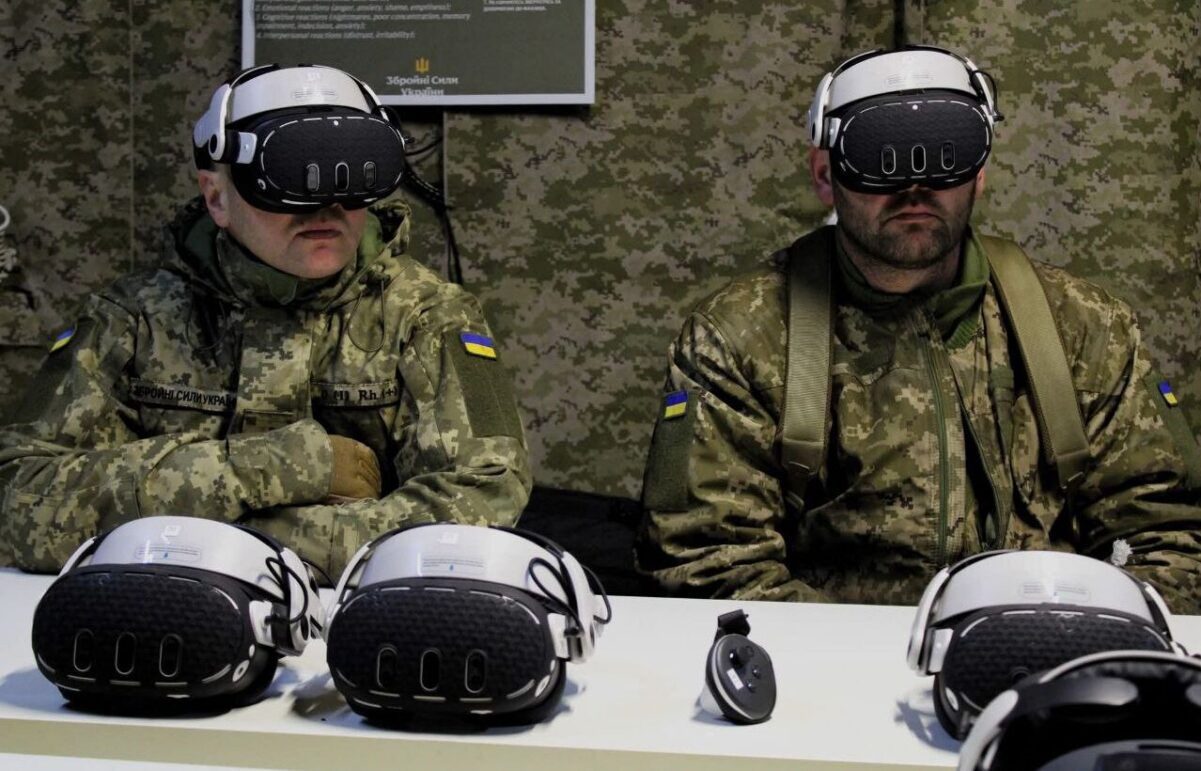
Just a few years ago, VR headsets were perceived as a symbol of entertainment and experimental educational projects. They existed alongside the gaming industry, scientific lab demonstrations, and niche startups. But the war changed not only the country’s security landscape, but also the logic of technological development. Now VR in Ukraine is not about amusement. It’s about training pilots, drone operators, military medics, sappers, and air defense engineers in conditions as close as possible to real combat situations. This is a technology that can save lives, reduce training time, and significantly lower the cost of training.
In parallel, global leaders have been steadily increasing investment in VR, especially in dual-use projects. In 2024, the global VR market for defense was valued at over $1 billion, and by 2032 it is forecasted to reach $3.6 billion. North America controls 44.73% of this segment, showing that the technology is no longer a novelty it has become part of the defense strategies of leading countries. Ukraine, finding itself in the realities of full-scale war, was forced to accelerate VR development severalfold. Over four years, dozens of teams have emerged, creating solutions for the military and veterans from FPV simulators to rehabilitation systems for the wounded. Among the active market participants are Aspichi, Tekhnari, Atmaraksi, Advin, Blue Arrow, and others.
To understand how this market is forming, it’s important to distinguish concepts often used interchangeably. VR or Virtual Reality is complete immersion in a digital space, where reality is completely cut off. The user sees only the virtual world, and among the best-known devices are Vision Pro, Quest 3, Steam Frame. AR or Augmented Reality overlays digital objects onto reality, familiar to anyone who has used social media filters or played Pokemon Go. MR or Mixed Reality combines virtual and real environments and allows interaction with digital objects in space. And XR is a general term that covers all realities together. FPV goggles used by drone operators are technically not VR, but VR simulators are now the main training tool for FPV pilots. Before 2022, the Ukrainian VR industry existed, but was very local. Studios emerged working on simulators, architectural and educational products, but demand remained minimal. Among the best-known startups were VR Inn, which raised $100,000 in 2019, and VRpartments, which received $310,000 in grant funding in Poland. Ukrainian companies Qualium Systems and Lucid Reality Labs worked in the international market, but the industry in Ukraine was only just forming. Full-scale war completely changed the situation. The need for safe training, able to model combat conditions without risk to life, increased. The Ministry of Defense began actively seeking VR and AR solutions for training infantry, FPV pilots, vehicle drivers, engineers, sappers, and medics. Mobile complexes like L7 Simulators can be deployed in 15-20 minutes anywhere from a training base to an underground shelter. They are suitable for “vehicle drivers helping to train in military vehicle driving,” as well as “evacuation and medical personnel VR helps train people how to do their job in conditions close to combat.”
In parallel with training systems, new means of controlling equipment are emerging. Due to the threat from Russian “Shaheds,” development of FPV drones like Sting began, which can be controlled via VR goggles. In 2022, a VR war memory museum was created in Kyiv region. The startup Aspichi began work on a VR film to prepare civilians for war. Later, the company focused on veterans’ rehabilitation, using VR as a tool to overcome psychological and physical trauma. It’s not only Ukraine that paid attention to these solutions. In May 2025, it was reported that Meta began cooperation with defense group Anduril to create EagleEye VR devices for US soldiers “for a $100 million contract.” This is a direct consequence of the Ukrainian experience global players saw VR’s effectiveness in real combat conditions.
Investments in VR have also grown domestically. In September 2025, the Ukrainian Startup Fund allocated UAH 61.5 million for dual-use technologies, including VR. At the same time, specialized VR hackathons began to be held in Ukraine, such as the December hackathon by Deminer’s Lab, aimed at creating a VR simulator for sappers.
Among Ukrainian teams working in military VR, Tekhnari, Blue Arrow, and Atmaraksi stand out. Tekhnari created the “Chaika” and “Chaika-M” simulators, already codified by the Ministry of Defense and used in the Armed Forces of Ukraine. Atmaraksi developed the “Duel VR: FPV vs GUN” simulator, which allows training of soldiers in combat scenarios. Blue Arrow works on automating combat drone operations. In rehabilitation, Advin is active with the VRNow project, which helps reduce phantom pain in people with amputations, and Aspichi, which received “$500,000 investment from the SMRK fund.” However, VR is still considered an experimental technology in the military. Headsets are heavy, cause fatigue and disorientation. The environment cannot fully reproduce the physical sensations of real combat. Prolonged VR exposure can even cause dizziness. That’s why, in parallel, the military started transitioning to alternatives: panoramic screens, dome simulators, tactile platforms, smart glasses, and mobile apps. For example, in 2025 Drill App raised $100,000 and launched a B2B training platform. The state app “Army+” offers similar functionality.
Despite this, VR remains irreplaceable for narrow tasks especially in training FPV drone pilots and modeling urban combat. In these segments, VR provides flexibility, speed, and the ability to create endless scenarios without spending on physical training grounds.



The future of VR in the military sphere is likely to be hybrid. The technology is no longer a “toy,” but not yet a universal tool. In the coming years, military training systems will probably combine VR, AR, panoramic displays, dome technologies, and physical simulators. VR will become part of a larger ecosystem, not a stand-alone solution.
Ukraine has covered in two years what would have taken other countries a decade. The VR market is no longer niche it has become strategic. War created conditions in which technology began to influence real processes: from soldier training to veterans’ rehabilitation. The industry responded with rapid growth, new teams, investment, and partnerships. Global giants also took notice of Ukrainian practices, and the Meta and Anduril example proves: the effectiveness of VR technologies is no longer just a theory, but proven practice.
At the same time, VR will remain only part of a broader spectrum of solutions. The military sphere will require more precise simulations, lighter interfaces, and more realistic tactile feedback. That’s why the future lies in hybrid simulators that combine the advantages of different technologies. Ukrainian companies are already moving in this direction, and the pace of the entire industry’s development will depend on how much the state supports such projects. VR is no longer seen as a luxury. It’s a tool that helps adapt to a new reality and saves lives. That’s why the development of this technology in Ukraine is not only military, but also of strategic significance for the country’s future.
About the Author

Related posts:
 Ukraine’s Economy in August 2025: Survival Mode with Support That Won’t Last Forever
  Technological Transformation in the Banking Sector: Ukrainian Banks in the New IT Reality
  Silent Vulnerability: How Password Reset Became a Hacker’s Favorite Tool
  Can You Live a Nighttime Lifestyle and Stay Healthy? Myths, Science, and the Reality of War-Time Ukraine