Ukraine’s Defense Industry: Production Growth, Export Potential, and the Rise of Private Companies in 2025–2026
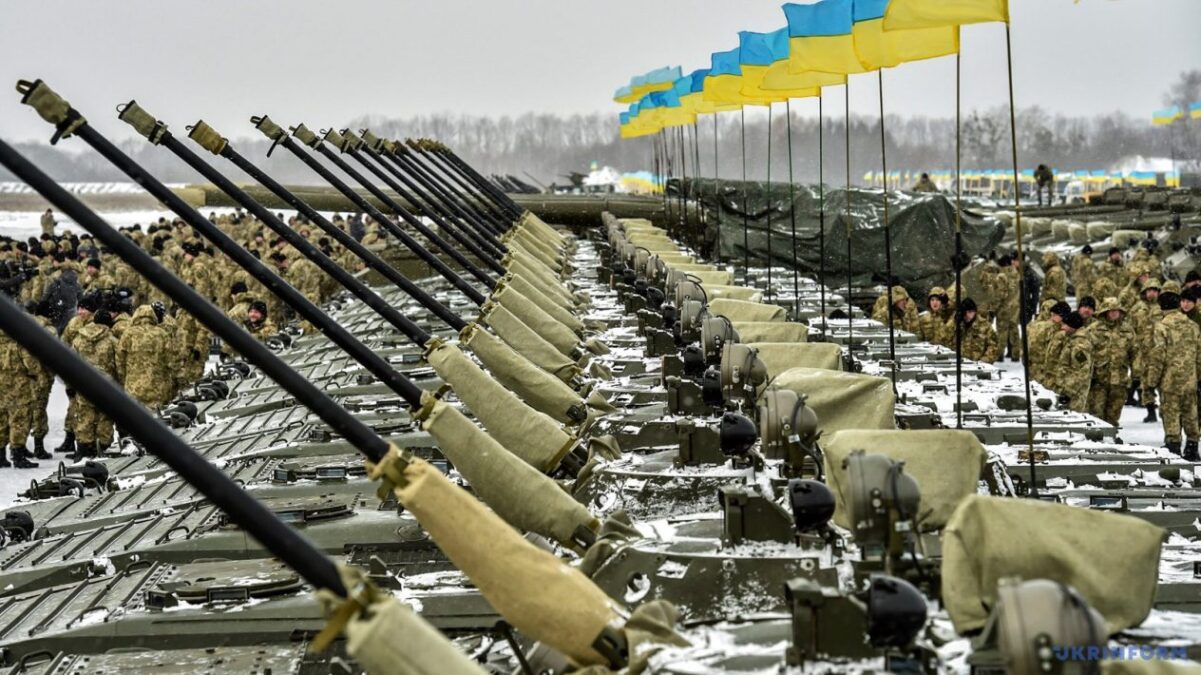
Ukraine’s defense industry is undergoing a transformation unseen in all the years of independence. The pace of growth is striking: arms production in 2025 may reach $35 billion, and in the following year, increase by another 43% to $50 billion. This leap is taking place under the constant pressure of war, as the market must quickly adapt not only to rising demand but also to new standards, technological challenges, resource shortages, and workforce deficits. Priority funding is directed toward strike systems kamikaze drones, cruise missiles, interceptors, reconnaissance-strike UAVs, modern bombers. The state sees these technologies as the main tool for maintaining balance on the battlefield, while for private manufacturers, this is a chance to prove their innovation, speed, and competitiveness. Over the last two years, the drone sector has multiplied several times; the army needs millions of units, and manufacturers are preparing new solutions with distributed artificial intelligence and automated battlefield coordination.
The main issue is not production speed the potential of enterprises already allows for billions of dollars in orders. The problem is the lack of long-term contracts and planning horizons. The budget allocates less than half of what factories can actually produce. The rest of the capacity stands idle or works for stock. This creates a paradox: the sector is full of ideas, investors are ready to pour in money, but uncertainty with state orders and the absence of stable rules slow down full-fledged development.
Export comes to the fore. Ukraine is preparing to launch weapons sales on foreign markets, but everything is just beginning: clear rules, mechanisms, standards, testing procedures, and certifications are needed. It is expected that the first contracts may appear not earlier than mid-2026, since the cycle of negotiations, trials, and alignment with European and US standards is much more complex than in Ukraine. The government is preparing two directions at once duplication of production abroad (creating “mirror” capacities in the EU, US, or Canada) and direct export of finished products and components.
Dependence on imported components remains critical, especially for electronics, semiconductors, and rare earth metals. In recent years, Ukrainian companies have reduced the cost of FPV drone parts several times over, a base of local manufacturers has emerged, yet it is still impossible to localize the full cycle. The principle of technological independence (“Chinese free”) is being introduced gradually, but even now, the best magnets for electric motors still come from China. The state understands this problem and has started to stimulate the domestic production of critical components, but for now, domestic parts cover no more than 20% of real annual needs.
Another issue is the shortage of engineers and technical specialists. Ukraine faces a paradox: demand for military personnel is growing, but technical faculties in universities lack enough students. The industry acutely needs experts in electronics, mechanical engineering, rocketry, hydraulics, chemistry, and industrial design. The combination of experienced older engineers with a new generation of developers and the involvement of people from civilian sectors is what allows the creation of modern conveyor lines and materials that did not exist in Ukraine a few years ago. On the other hand, over 90% of the market is already in private hands, most of whom have little experience and have only been in the sector for 1–3 years. They are still learning to sign export contracts, create joint ventures, and obtain international certifications. Yet this is where the main leap occurs speed of change, flexibility, unconventional solutions, and new approaches yield results that were previously impossible for the state sector.
Ukraine’s defense market is changing before our eyes. After the end of hostilities, it is expected that only the most efficient companies will survive, production will be unified, and enterprises will merge into powerful conglomerates. Many current producers who cannot withstand competition will leave the market or be absorbed by leaders. Groups are already forming those who create integrated solutions for the army, offering not just a drone or missile but a full system with EW assets, intelligence, support, and repair.
Cyberattacks and intellectual property protection are yet another challenge. Daily attempts to steal technical documentation, attack production servers, or disrupt communications have become a routine for all sector players. Therefore, information security has become as crucial as armor on the battlefield.
Post List




Despite all the risks, limitations, and uncertainty, the industry is not only surviving but also showing development dynamics that surprise even the most skeptical experts. Ukraine is gradually integrating into the production chains of its allies, preparing for a new role not just as a consumer but as a supplier of advanced military technology. There are still many barriers ahead financial, technological, and bureaucratic. Yet already now, it can be said with confidence: Ukraine’s defense industry is experiencing a moment of real maturity. And it is the ability to scale up production, keep innovating, and adapt to future challenges that will determine the country’s security and strength.
About the Author

Related posts:
 Europe’s Defense Industry: How War and EU Programs Accelerated Arms Production
  Scrap Metal Shortage in Ukraine: Why 2026 May Become Critical for the Industry
  CBAM and Ukrainian Industry: Why the New EU Carbon Barrier Threatens Key Sectors and Whether Ukraine Can Adapt
  Financial Motivation for Defenders: Can Ukraine Change Its Defense Approach with EU and Partner Support?