Corporate Catering in Ukraine: How Companies Are Transforming Offices and Employee Motivation
In Ukraine, corporate catering has long gone beyond merely meeting employees’ basic needs. Today, it is an element of employee care, a motivation tool, and one of the competitive advantages for employers amid the staff shortage. Providing quality lunches in modern offices is becoming especially relevant not only from an economic perspective, but also from a social one, particularly in times of energy challenges.
With the rising cost of business lunches and meals in public food establishments, corporate food services are often more affordable and accessible for employees. This trend is further intensified by potential power outages: “In case of blackouts, offices equipped with generators are a more comfortable place to work for many employees than their own homes. Therefore, organizing catering in this case becomes part of companies’ critical infrastructure.” Businesses are investing in creating a comfortable office ecosystem where food is one of the key factors for employee engagement and loyalty.
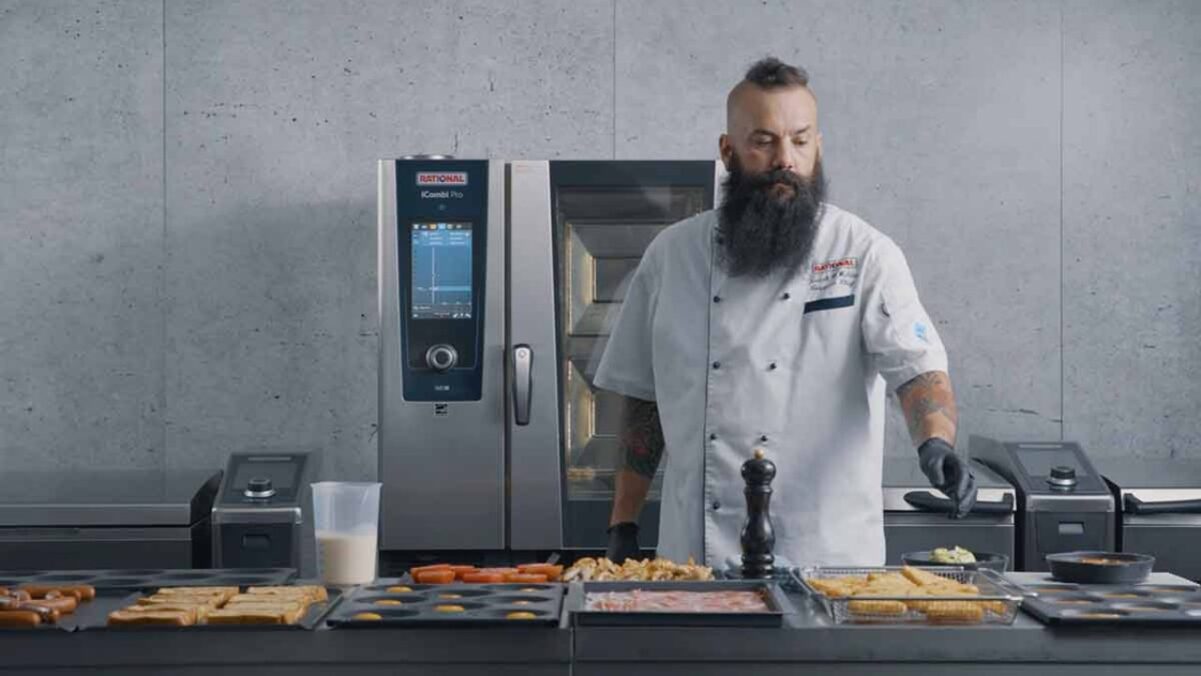
The Ukrainian corporate catering market is rapidly changing. Market players adapt their offers to new realities, introducing new formats, flexible menus, and modern technologies. Alongside classic canteens at large enterprises, there is an increasing number of catering services, lunch delivery, smart refrigerators, and vending machines. Offices of business centers, educational, and medical institutions are increasingly using the services of leading companies such as MHP Food Service, La Famiglia Catering, Unit Catering, Star Lunch, Gudfood, focusing on comprehensive service.
Key Customer Sectors and Their Needs
The demand for catering at work persists in many sectors, but the most active customers remain IT companies, manufacturing, logistics, healthcare, and education. For the IT industry, corporate catering has already become an integral part of the employee care package: “For them, corporate catering is an important component of the employee care package.” Manufacturing and logistics companies emphasize the need to provide meals directly on-site or through delivery, while medical institutions focus on quality and menu variety.
Business has clear requirements for service: flexibility, quality of dishes, the ability to combine formats, availability of healthy eating options, including dietary and vegetarian menus. Employees want to avoid queues, so convenient ordering and payment are also a mandatory standard.
A New Standard: Health, Automation, and Personalization
The demand for healthy, balanced food is increasing more and more Ukrainians are choosing meals with fewer carbohydrates, higher in protein, vegan, and vegetarian diets. “We see more and more people switching to healthy eating: reducing carbohydrate intake, adding more protein, choosing balanced meals. Interest in vegan and vegetarian diets is increasing it’s no longer a niche trend, but a new norm,” says Maryna Bryhynets, head of corporate and medical catering at La Famiglia Catering.
The modern market is increasingly introducing automated solutions: smart refrigerators, vending machines, digital platforms for ordering and payment. “Process automation now covers almost all areas. At the same time, service remains key because employers want to receive a full service cycle: from ordering to assortment proposals, delivery frequency, storage, and consumption conditions,” emphasizes Nataliia Ihnatyuk, project manager at MHP Food Service.
Post List



Corporate Catering as Part of the Employer Brand
Organizing workplace lunches is now an element of non-material motivation, part of the social package, and an important component of the employer brand. “For companies, corporate catering becomes an element of non-material motivation and part of the social package. And for the employer brand, it works very well when you offer a nice office, a team, and also free meals. In times of war, stress, power outages, this is already a must-have for companies that care about their employees,” says Olha Maslovska, project manager at La Famiglia Catering.
Many companies that are bringing employees back to the office primarily consider catering organization as a key comfort and engagement factor. “I can’t say that corporate catering is the main incentive to return to the office, but it definitely helps make this process more pleasant and convenient,” notes Olena Merezhko, executive director of Unit Catering.
Corporate catering in Ukraine is becoming part of companies’ critical infrastructure and one of the markers of employee care and employer competitiveness. In conditions of staff shortages, energy challenges, and high labor market competition, organizing quality catering ensures employee loyalty, engagement, and productivity. The key trends flexibility, innovation, process automation, development of healthy eating, and digital platform integration are already changing the market and shaping a new corporate culture of care for people.
About the Author

Related posts:
 Medical Insurance as a Key Factor in Business Competitiveness During Crisis
  Staff Crisis and Labor Market Transformation: How War Changes Ukrainian Business
  Labor Market 2026: How Staff Shortages and Wage Growth Are Changing the Rules for Business
  How a Corporate Dispute Threatens Ukraine’s Only New Salt Mining Project