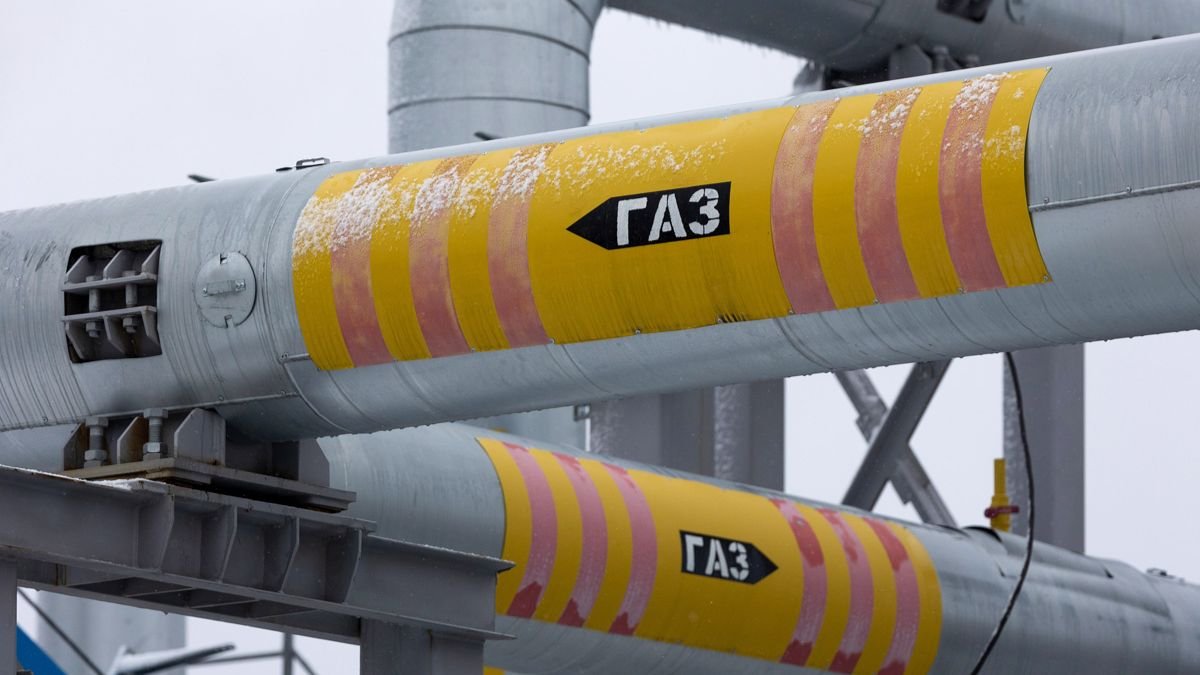
Moldova’s decision to approve two new gas supply routes from Greece to Ukraine has become a significant signal for the entire region. This development is not just about logistics or technical modernization it is a real step toward enhancing energy security and increasing the flexibility of Ukraine’s gas market. The announcement from Moldova’s National Energy Regulatory Agency (ANRE) makes the primary objective clear: to facilitate the flow of natural gas from Greece to Ukraine through the Trans-Balkan infrastructure and to create additional conditions for diversifying supply sources.
Starting from December 2025 through April 2026, Moldova’s gas transmission system operator, together with operators from Greece, Bulgaria, Romania, and Ukraine, will implement two new special capacity products “Route 2” and “Route 3.” These services will be offered monthly via auctions, using a single-price algorithm and providing discounts to the transit operators’ tariffs. The structure of the new routes is designed to fully utilize the existing infrastructure: the Greek interconnector, the Trans-Balkan corridor, the Bulgarian, Romanian, and Moldovan networks, with Ukraine as the final destination.
It is important to emphasize that this is not simply a technical upgrade or an “addition” to current routes. The mechanism for implementing special capacity products enables more efficient use of the transmission pipelines and creates new opportunities for purchasing gas not just pipeline gas but also liquefied natural gas (LNG) arriving at Greek ports. According to the Moldovan regulator, “the implementation of these products will increase the volume of gas transit through Moldova’s transmission system and indirectly lay the groundwork for optimizing future tariffs for natural gas transportation services.” In practical terms, this could mean lower transportation costs and more flexible conditions for suppliers.
The core of the change is that a genuine alternative to the traditional import routes is emerging. Previously, most of Ukraine’s gas imports came through Poland, Hungary, or Slovakia. Now, a fully functional “southern corridor” is opening up. In May this year, the first service “Route 1” was launched, demonstrating the effectiveness of transit via the vertical gas corridor. The new step is to scale this model: “Route 2” starts from the Amphitriti connection point on the DESFA network, runs through the Greece-Bulgaria interconnector, and then continues via the Trans-Balkan corridor. “Route 3” begins at the IGB connection point with the Trans-Adriatic Pipeline and follows the same path. These routes do not merely duplicate each other but ensure flexibility in case of technical or market shifts.
A key focus is Ukraine’s energy security. In the context of ongoing military aggression and the constant risk of losing traditional import routes, every new route represents another safety net. Additionally, the operators have built in mechanisms for tariff discounts and optimization, allowing for competitive transit prices. All this directly impacts price stability for Ukrainian consumers and provides greater assurance as the country prepares for the heating season.
The international context is also crucial. The decision was coordinated among all gas transmission system operators from Greece to Ukraine, including Bulgaria, Romania, and Moldova. In fact, this is the first large-scale experience of synchronized work among all regional countries in a major infrastructure project that directly affects the entire Eastern European energy sector. The designed capacity of the corridor in the Greece–Bulgaria direction already reaches 3 billion cubic meters of gas per year, and the operator does not rule out the possibility of increasing this to 5 billion if the market requires it.


Despite the strategic importance of these decisions, some open questions remain. Not all technical details or guaranteed volumes have been defined for the long term; tariffs depend on numerous players in the chain, and practical implementation of the new routes requires coordinated efforts by operators and timely national-level decisions. Nevertheless, a successful pilot LNG transit from the United States through a Greek port and the vertical corridor has already proven the viability of this route. As the Moldovan Minister of Energy noted, “the state-owned company Energocom successfully tested LNG deliveries from the US through the Vertical Gas Corridor, pumping regasified fuel from a port in Greece to Ukrainian underground storage.”
In summary, the approval of two new gas supply routes from Greece to Ukraine is not just another industry news story. It is a concrete, multi-layered response to the challenges facing the region. Ukraine gains not only a new import direction but also an additional tool for maintaining stability during peak demand, reducing dependence on one or several directions, and attracting new suppliers. Energy security, source diversification, partner support, and the potential for tariff reductions are the key benefits arising from the decisions made at the level of operators and regulators in the region. This kind of cooperation demonstrates that, even under complex geopolitical conditions, there is room for flexible and strategically significant solutions that serve the future of the entire system.
About the Author

Related posts:
 Heating Season 2025: Is Ukraine Really Ready?
  Business Relocation in Ukraine in 2025: Numbers, Routes, Reasons, and Consequences
  Ukraine’s Gas Reserves: The Lowest Level in 12 Years, but Injection Rates Are Rising
  Uman Pilgrimage Ban 2025: How War Has Disrupted the Annual Religious Journey of Thousands of Hasidic Jews