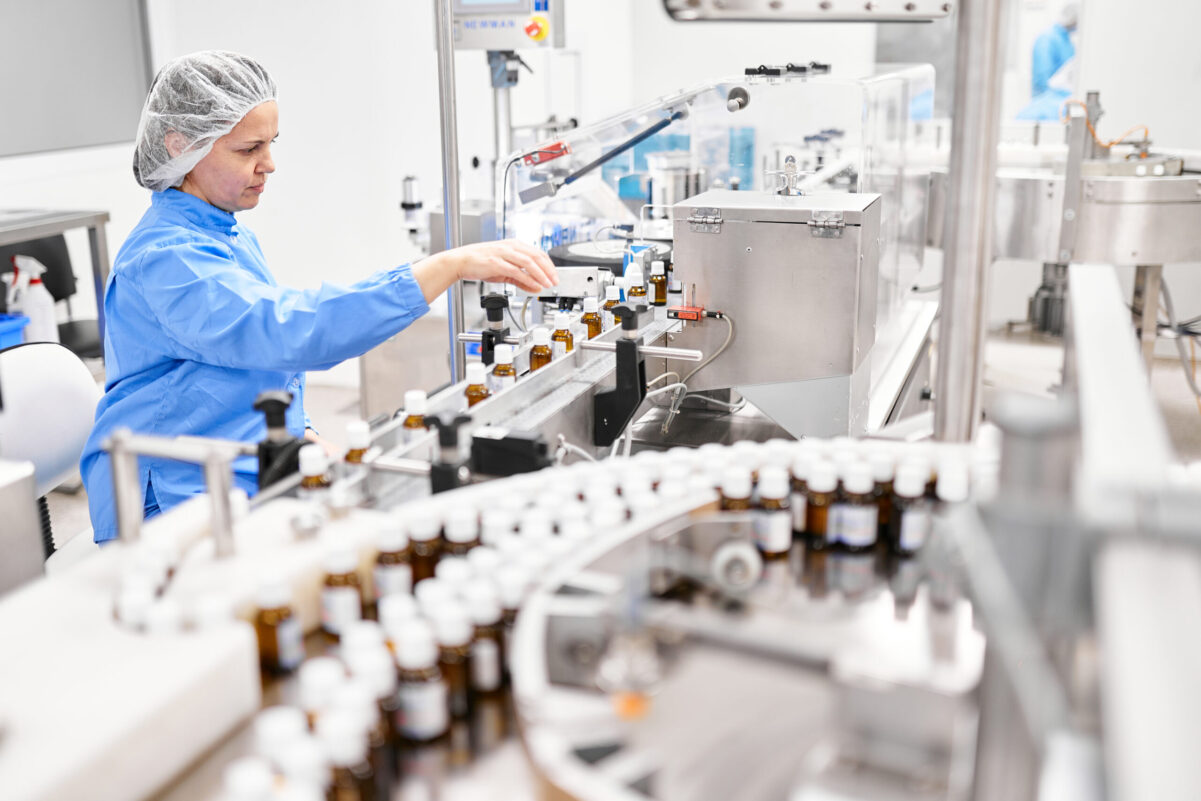
Pharmaceutical Market of Ukraine 2024-2025: New Rules, Taxes, and the Balance of Interests
In 2024-2025, the pharmaceutical sector continues to strengthen its position as one of the key industries contributing to the national budget. Five market leaders were included in the top 100 largest taxpayers: Farmak, Acino (Arcera Group), Darnytsia, Teva Ukraine, and InterChem. Together, these companies paid UAH 3.2 billion in taxes for 2024and an additional UAH 1.8 billion in the first half of 2025. The sector demonstrates resilience despite the ongoing war and economic turbulence.
Following a nearly 30% decline in 2022, pharmaceutical production has gradually recovered: +3.1% in 2023, and +6.3% in 2024. Although the industry has not yet returned to pre-crisis growth rates, it is steadily approaching stable performance indicators.
In value terms, the market is dominated by foreign brands with more than 63% market share, while Ukrainian producers hold about 34%. In unit terms, however, 61% of all products sold are domestically produced, compared to 39% foreign. This reflects the price affordability of Ukrainian medicines, even as the majority of revenue goes to foreign companies.
Market leaders continue to invest in innovation and diversify their product lines. Farmak introduced 6 new medicinesand launched 8 R&D projects in the first half of 2025. Darnytsia added 44 new medicines during the war period, including new antidepressants, anti-inflammatory, and analgesic drugs in 2025. It also entered new international markets in Bosnia and Herzegovina, Georgia, and Lithuania. InterChem introduced 4 original medicines during wartime and maintains more than 10 products consistently among the top 100 most popular in Ukraine. Teva Ukraine remains one of the largest importers, delivering over 260 brands annually and supplying critical medicines under state programs.
The so-called “pharmacy basket” reached UAH 112 billion in the first half of 2025 a 21% increase over the same period in 2024. However, the number of units sold grew by only 1%, indicating that price increases are the primary driver of growth. Pharmaceutical prices rose 7.3% over the first 9 months of 2025. Other growth factors include a shift toward more expensive products and a moderate influx of new brands.
Major companies and their contributions to the budget
Farmak: UAH 1.3 billion in taxes for 2024, UAH 0.7 billion in the first half of 2025; net revenue UAH 10.8 billionand UAH 5.9 billion, respectively.
Acino (Arcera): UAH 596.4 million in taxes in 2024, UAH 411.5 million in H1 2025; net revenue UAH 7.3 billionand UAH 4.4 billion.
Darnytsia: UAH 590 million in taxes in 2024, UAH 298.9 million in H1 2025; net revenue UAH 6.9 billion and UAH 1.7 billion.
Teva Ukraine: UAH 446.1 million in taxes in 2024, UAH 287 million in H1 2025; net revenue UAH 3.8 billion and UAH 2.4 billion.
InterChem: UAH 227.8 million in taxes in 2024, UAH 123.4 million in H1 2025; net revenue UAH 1.2 billion and UAH 0.6 billion.
Regulation in the sector is tightening: the government has introduced maximum wholesale prices, restricted distribution mark-ups, and increased antitrust enforcement. The ban on marketing payments reduced distribution profitability. Tax pressure eased slightly in early 2025 due to lower drug prices but stabilized by Q3 as revenues and tax contributions rose again. Anatolii Reder, CEO of InterChem:
“From Q3 onward, the situation began to stabilize. Additional cost burdens have leveled out, revenues have increased, and so have tax contributions. Now we’re seeing reasonably high and stable load indicators.”
Vitalii Haiduchenko, CFO of Teva Ukraine:
“As a responsible taxpayer, we haven’t experienced a significant number of audits either before or after the moratorium, so we haven’t seen any major changes in this respect.”
Post List




The pharmaceutical sector is showing adaptability in crisis, but is increasingly shaped by fiscal policy and state regulation. Neither domestic nor foreign players dominate the market entirely. While Ukrainian producers lead in units sold, foreign companies hold the market value lead. Growth is largely driven by inflation, product innovation, and state healthcare programs.
The pharmaceutical market in Ukraine in 2024-2025 is at a turning point. The sector must navigate between affordability for patients, competitiveness for domestic manufacturers, and reliable tax contributions to the state. Despite external shocks, the industry remains resilient, reshaping itself through innovation, price adaptation, and international expansion. While growth in monetary terms seems impressive, its foundations are not solely production volume but price dynamicsand shifts in consumer choice. The leading companies Farmak, Acino, Darnytsia, Teva Ukraine, and InterChem set the pace for the sector. The future of the industry will depend on transparent state regulation, balanced fiscal policies, and a predictable business environment. Achieving this balance will strengthen both the health sector and the broader economy.
About the Author

Related posts:
 Regulation of the Real Estate Services Market in Ukraine: Public Demand, Government Response, and Market Prospects
  How Ukrainians Are Driving Poland’s Economy: Taxes, GDP, and Business Growth
  Pharmaceutical Market of Ukraine 2025: Transformation, Risks, and the Search for Balance
  The Shadow Tobacco Market: Why the State Loses Billions and How to Bring Them Back into the Budget During Wartime