Business as a Pillar of Defense: Why the “Tasty for Drones!” Campaign Is Becoming a New Standard of Responsibility in Wartime Ukraine
In Ukraine, the full‑scale war has continued for a third year, and the economic front is becoming increasingly intertwined with the defensive one. In these conditions, it becomes clear that the role of business goes far beyond tax payments or supporting the economy. Some companies take part in charitable initiatives not as one‑time gestures, but as part of a systemic approach to responsibility toward a country fighting for survival.
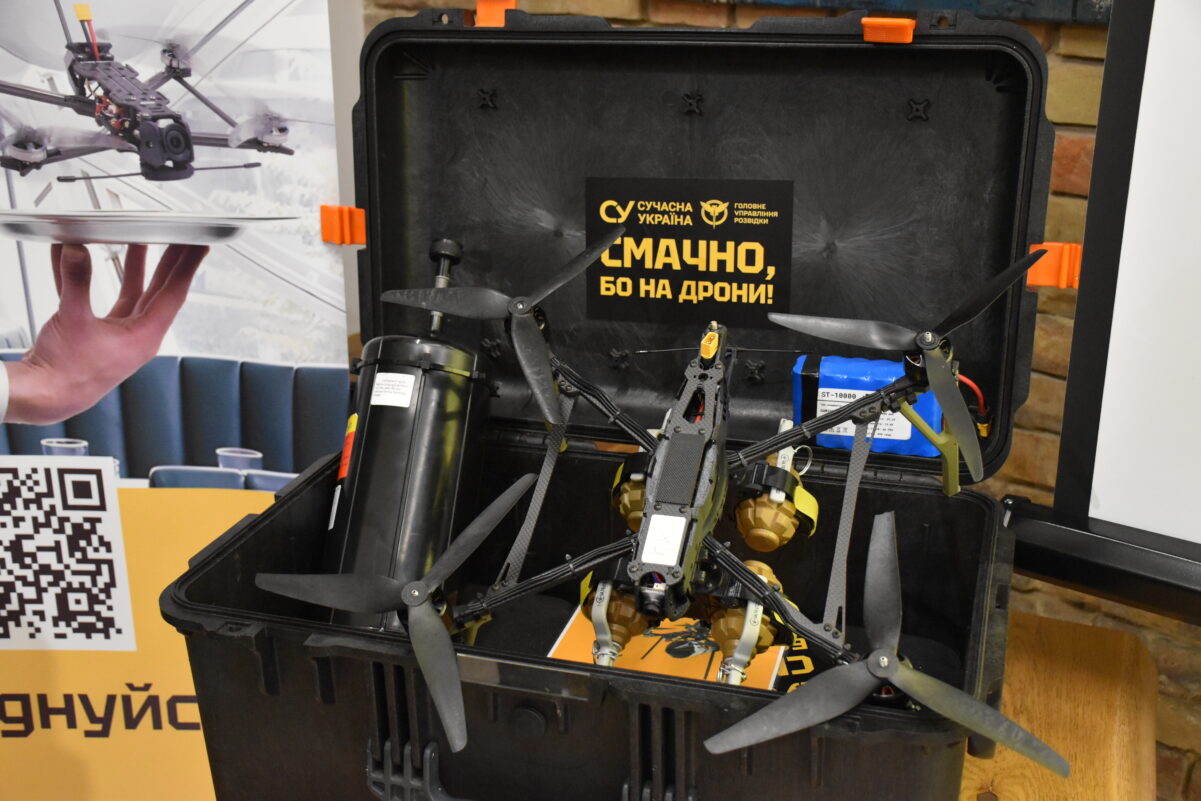
One such initiative is the “Tasty for Drones!” campaign of the “Modern Ukraine” Foundation a project that began as a restaurant campaign but has now expanded into broad‑scale cooperation across different sectors of the economy. Its aim is simple yet strategically vital: raising funds for FPV drones for the Defence Intelligence of the Ministry of Defence of Ukraine. This is not merely a fundraiser. It is an example of how business can become part of the country’s defense capability without changing its core activity, but by transforming it into a space of responsible partnership.
How the Campaign Works: A Mechanism Without Excess Emotion
The campaign began on September 7, on the Day of Military Intelligence of Ukraine, initially within the restaurant sector. But its format quickly became universal. Every establishment or company purchases or co‑funds a SECRET BOX a set worth 50,000 UAH, which includes an FPV drone and all components required for full combat use. Everything operates transparently:
- a business chooses a convenient format of participation full payment of a BOX, partial funding, or an internal team fundraiser
- after the contribution, the company automatically appears on the interactive campaign map
- each new BOX is recorded in the public progress tracker
The restaurant industry scaled the initiative rapidly, introducing charitable menu items or allocating a portion of sales. But today the campaign attracts IT companies, retail, service sectors, logistics, manufacturing sectors that historically did not take part in such initiatives. This is what makes the campaign notable.
Why Businesses Join: Not About Image, but About Responsibility
For many companies, participating in such initiatives is not about image or publicity.
It is about a clear understanding that economic activity is only possible because those on the front line hold the line. The President of the “Modern Ukraine” Foundation, Volodymyr Havrysh, expressed this with simple but precise words:
“Ukrainian intelligence officers risk their lives every day to save ours. Their work is invisible, but it is what makes the state stronger.”
This is not rhetoric. It is a direct description of reality. FPV drones have become a key tool for reconnaissance and strike missions, and supporting such units is not a matter of the future it is a question of daily security. Therefore business participation is not a “kind gesture” but part of collective defense, where every sector takes responsibility for what it can do best.
The Scale of the Initiative: Geography and Dynamics
Today, the campaign includes more than 170 restaurants, cafés, bars, hotel‑restaurant complexes, and companies from other industries. Funds have already been raised for 36 SECRET BOXes, and the first batch of drones is already preparing to be transferred to intelligence units. The initiative is growing not only in number but also in format:
- restaurant chains add charitable menu positions
- IT companies launch internal fundraisers
- retail mobilizes customers through checkout campaigns
- service companies create their own donation mechanics
This shows that the campaign has outgrown its original sector. It has become a model of a new standard of defense support, in which business is not separate from the war but integrated into it through transparent and understandable solutions.
Why This Matters Now
During a prolonged war, state resources are not unlimited, while frontline needs keep growing. Business during this period plays the role of a stabilizer, capable of not only supporting the economy but also covering critical military needs in a way that is not burdensome to society. Initiatives of this scale matter for several reasons:
- they reduce the load on the state budget, redirecting resources to other urgent sectors
- they create a healthy culture of responsible partnership, rather than isolated actions
- they unite teams within companies, building a sense of shared purpose
- they strengthen local communities, where each business becomes a support point for the army
In wartime, such models are not just desirable they are necessary. They create a long‑term system of defense support, one that does not fluctuate with economic conditions.
Symbolism and Philosophy: When the Rear Works as a “Brigade”
A meaningful parallel was drawn by well‑known Ukrainian chef Olha Martynovska. During her studies at Le Cordon Bleu in France, she observed how the kitchen staff were referred to as “la brigade” a unit where everyone has a role executed precisely and responsibly. Her words reflect the essence of the initiative:
“The kitchen is like an army. It cannot operate on one person. Everything must be clear, coordinated, and structured.”
This same logic applies to society today: the army on the frontline and the army in the rear operate on the principle of collective effort. The “Tasty for Drones!” initiative is exactly such an effort.
What This Gives the Country: An Impact Beyond Fundraising
The campaign may collect 100 or more SECRET BOXes already a significant contribution to intelligence operations. But its broader impact is even more important:
- it fosters a culture of collective business responsibility
- it creates a transparent mechanism of defense support, free from suspicion
- it demonstrates unity between different economic sectors
- it embeds philanthropy as a normal business practice
This is what matters most. In a time when the country relies on the resilience of people and institutions, any tool that strengthens this resilience becomes not just helpful strategically critical.
Post List




The “Tasty for Drones!” initiative is an example of how business can be not only a taxpayer but a genuine partner of the state in its most difficult moment. It shows that responsibility in business is not about loud statements, but about clear actions, taken exactly when they are needed most.
Today Ukraine needs not scattered efforts but structured movement. That is why such campaigns become a model for how interaction between the state, society, and business should work during wartime.
This is not charity as a gesture. This is collective defense as a system.
And that is why such projects should not merely be supported they should be expanded, developed, and integrated into the new culture of business in Ukraine.
About the Author

Related posts:
 iCAR.ua: A New Standard for EV Charging Business in Ukraine
  Anti-Shahed Defense System: How the Armed Forces of Ukraine Are Expanding Their Capabilities Against Kamikaze Drones
  Fake Attacks on Business: How Ukrainian Companies Can Protect Their Reputation
  Ukrainian Defense Tech Valley 2025: Over $100 Million in Investments