International Bus Transportation: How Ukraine’s Market Is Growing Amid War, New Challenges, and Future Prospects
After the start of the full-scale war and the mass departure of Ukrainians to Europe, the international bus transportation market underwent unprecedented changes. This segment became one of the few not only to survive but to multiply several times over. According to estimates, revenues from international passenger bus transportation in Ukraine in 2022 grew more than eightfold. Many new companies entered the market, and existing ones were able to sharply increase volumes, though not without challenges.
The reasons for this surge are obvious. First, over four million Ukrainians found themselves in Europe as refugees. They regularly travel between EU countries and Ukraine visiting relatives, returning on business, planning for the future. Second, with air travel unavailable, the bus became the main means of crossing the border. Traditional tourist flows, which, despite the war, continue to travel for leisure to Europe, also added to this.
At the same time, the boom in international transportation was accompanied by a decline in demand for domestic routes within Ukraine. Due to hostilities, demographic changes, mobilization, and population relocation, many interregional and domestic trips have been reduced or closed.
Reorganization and Optimization of the Market
For transport companies, this meant a large-scale reorganization of route networks:
- redirecting buses to international routes,
- optimizing logistics according to demand in different EU countries,
- investing in fleet renewal to meet the standards and requirements of European roads.
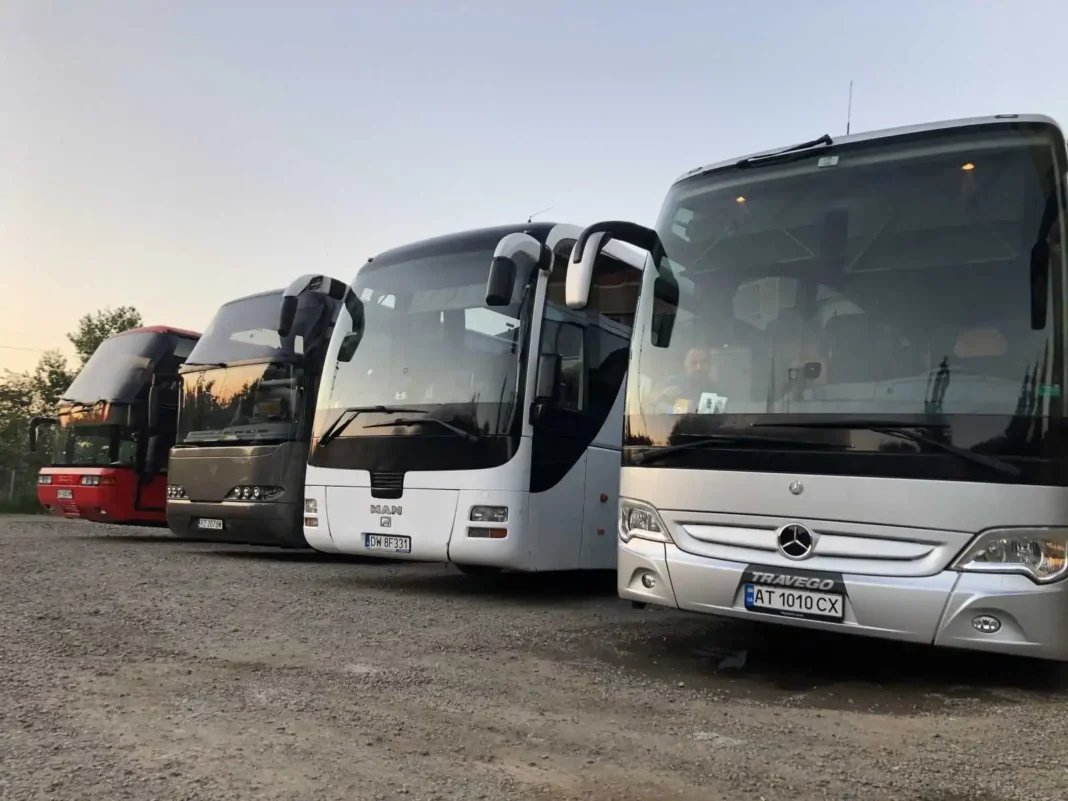
On average, the largest companies now operate about 500 trips per day, with the majority being international. Passenger traffic volumes have stabilized: in 2023-2024, companies transport over 200,000 passengers each month.
Problems and Constraints for Ukrainian Carriers
However, market growth does not mean the absence of problems.
- A shortage of qualified drivers has become one of the most acute issues for the entire industry. Many people have changed professions or left the country, others have been mobilized. Recruiting, training, and retaining staff have become top priorities for all legal carriers.
- High import duties on buses from Europe (20%) make fleet renewal expensive. Modern environmental requirements have also become stricter: “Euro-5” and “Euro-6” are now standard, while there is virtually no domestic production of buses for international transport.
- Unequal conditions with European companies. Ukrainian carriers often cannot insure vehicles and passengers traveling to Ukraine due to the country’s status in Europe. At the same time, there are additional tax burdens on bus imports.
- The impact of illegal carriers remains significant in both the domestic and international markets. This negatively affects the competitiveness and service quality of official companies that work transparently and pay taxes.
Domestic Market: Reduction but Not Collapse
While the international segment has recovered to pre-war volumes, the domestic market has contracted significantly. Some people are serving in the military, others have moved to other regions or abroad, so many domestic routes have been discontinued or reorganized according to the new demand map.
Adaptation and Innovation
To maintain their positions, Ukrainian carriers:
- invest in updating their fleet and technologies,
- implement modern online ticket booking methods,
- automate service and respond to changing market conditions as quickly as possible.
These factors have helped market leaders avoid staff cuts even during crisis periods.
Post List




Prospects and Key Challenges
The main uncertainty for the industry is the future after the end of martial law and the restoration of air travel. It is expected that some passenger traffic will return to airlines.
At the same time, international bus transportation will remain an important mobility tool for millions of Ukrainians until the economy, security, and logistics of air travel are fully restored.
The main challenges for the industry in the coming years are:
- maintaining and developing the route network,
- further renewing the bus fleet,
- overcoming the shortage of personnel,
- combating illegal transportation,
- keeping competitive prices for passengers.
The international bus transportation market in Ukraine after 2022 has become a strategic sector for millions of Ukrainians who have left the country or regularly travel to Europe.
Despite serious challenges, companies have not only managed to hold their ground but continue to adapt, modernize, and set new service standards.
Infrastructure development, government support, and overcoming obstacles in legislation and the market are critically important for stable growth in the long run.
About the Author

Related posts:
 How the War Changed the EU Gas Market: The End of Oil Indexation and Gazprom’s Strategic Failure
  The Electric Vehicle Market in Ukraine: Growth Amid War and What Is Holding Back Infrastructure Development
  The Ukrainian Fuel Market: Price Stability Amid Global Fluctuations and New Logistics Challenges
  “Code 95”: How New European Requirements Are Changing the Rules for Ukrainian International Drivers