Flamingo: What We Know About Ukraine’s New Long-Range Cruise Missile and How It Reshapes Deep-Strike Options
A new Ukrainian long-range player has entered the public eye the Flamingo cruise missile. The project already comes with factory photos, claims of series production, and a range of up to 3,000 km with a warhead around 1,000 kg. Many of the cited figures align with the FP-5 from Milanion Group, so analysts cautiously speak about platform identity or deep localization. It isn’t a wunderwaffe, but a simple, mass-producible long-range cruise missile exactly the tool that strikes Russia’s military-industrial base deep in the rear.
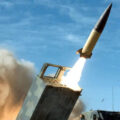
Open sources published photos of two large cruise missiles on trailers, taken at a Ukrainian site. At the same time, reports and comments repeated the key specs: range up to 3,000 km, cruise speed about 850-900 km/h (peak up to 950), flight altitude up to 5 km, time aloft up to 4 hours, warhead up to ~1,000-1,150 kg, wingspan about 6 m, max launch mass up to 6 t. By appearance and layout this is very close to the FP-5, shown at a leading defense expo. The FP-5’s maker explicitly highlights a simple fixed wing, rail launch, and a longer pre-launch prep of 20-40 minutes as a deliberate trade-off for price and throughput. One of the most pointed assessments puts it this way:
“Conceptually, the FP-5 is made as simple as possible. The wing doesn’t fold, launch is from a rail, not a transport-launch canister. Pre-launch prep is too long compared with other cruise missiles a full 20-40 minutes. But that’s exactly about cost, simplicity, and production tempo.”
In technical terms Flamingo is a heavy, ground-launched cruise missile with spartan architectureoptimized for volume and unit cost, not for record-setting stealth.
There haven’t been many formal lines, but the tone is telling. Defense Minister Denys Shmyhal confirmed that Ukraine has “long-range and very powerful” weapons and added that details would be revealed “when the right moment comes.” That is strategic communication: confirm the capability without publishing precise specs and employment concepts. The state confirms the class, but does not gift the enemy exact parameters and vulnerabilities.
How Flamingo differs from “cheap drones” and NATO cruise missiles
- Versus UAVs: the key differences are mass and warhead. Even Ukraine’s best long-range drones typically carry dozens of kilograms of explosives. Flamingo is on the order of a ton. That solves tasks where you need kinetic and blast power against shop halls, compressor houses, test stands, transformer yards, not just thin targets.
- Versus Storm Shadow/SCALP or Tomahawk: Flamingo is simpler and likely cheaper. It’s wrong to compare it to NATO classics by seeker “intelligence” and low-observability. Instead think “mass-use hammer” for serial salvos. A Ukrainian manufacturer’s reaction is illustrative: “‘Tomahawks,’ first, are outdated; second, they are already much worse in technical characteristics. Everything is worse in them than in today’s ‘Flamingo.’ Third, they are, it seems, five times more expensive, without transportation and delivery means. This is already series production, this is not a prototype, but fully Ukrainian production.”
The “simplicity + volume” concept here isn’t a flaw but a military-economic doctrine. Exhaust Russian air defenses and hit MIC nodes with a cheaper missile carrying a heavier warhead a logical choice.
With a claimed 3,000 km range, practically all critical nodes of Russia’s MIC in European Russia and parts of the Urals come into play. For scale:
- Kyiv to Moscow ~750 km.
- Kharkiv region to Yelabuga in Tatarstan (Shahed production) ~1,400 km.
- From the same area to Izhevsk’s “Kupol” ~1,300 km.
A note for those “on the other side”: building a uniformly dense air-defense umbrella over that expanse is physically impossible. Yes, object air defense will cover the most critical plants, but mass, layered salvos with decoysand UAV “channel cloggers” will inevitably open windows. For Ukrainian readers this means: yes, it is possible to reach deep and hit hard the question is production tempo and employment tactics.
Fair point: as a relatively large-RCS, subsonic target at up to 5 km, Flamingo is not a stealth. It will be seen by radar belts and can be tracked by SAM systems from older to newer generations. But:
- Mass simultaneity + route diversity + terrain masking + EW reduce air-defense throughput and raise the intercept cost.
- A heavy warhead means even a modest leak-through fraction yields serious effects.
- Russia’s sheer size and line lengths make blanket defense unrealistic without robbing other sectors.
The core risk isn’t “will they shoot it down,” but “how many get through.” In an attritional AD game, advantage goes to the side that replenishes its missile park faster and cheaper.



Where optimism should stop: what needs confirmation
To keep journalism factual, separate claimed from confirmed:
- Specs. There is no public official datasheet with the full Flamingo specs yet. Much of the circulating data overlaps with FP-5, which explains cautious wording like “likely identical/localized.”
- Series production. Strong messaging from industry and real photos exist, but throughput and cadence remain non-public.
- Combat launches. There are videos and statements about test and combat use, but broad independent verification with geolocation and damage imagery is still sparse.
Measured presentation makes sense. Use “it is claimed,” “according to the manufacturer/industry media,” “corresponds to the FP-5 platform”. That is honest and still gives readers the full picture.
In the 21st century, victory belongs not only to the “smart missile,” but to the economics of the salvo. Simplicity means shorter production cycles, fewer bottlenecks, localization of critical components, and field maintainability. Ukraine’s edge is entrepreneurial teams that can assemble supply chains from available tech and scale output quickly. That is why experts offer not pomp, but very pragmatic lines:
- “It really is a simple missile; it cannot be compared to Storm Shadow/SCALP. But in this case, you don’t need some very complex guidance systems… Because the first priority is to destroy Russia’s military-industrial complex.”
- “‘Tomahawks’ are outdated… everything in them is worse than in today’s ‘Flamingo’… They are about five times more expensive… This is already series production… fully Ukrainian production.”
Takeaway: the bet is on “steel simplicity” that delivers a ton of argument to the right address.
What this means for tomorrow
- For the front: a new level of threat to Russia’s strategic rear emerges. That means a redistribution of air defenses and costly defense for the enemy.
- For diplomacy: demonstrating indigenous long-range capability strengthens Kyiv’s hand in talks on technology access, co-production, and risk insurance.
- For industry: if series tempo holds, Ukraine will field a full spectrum from allies’ “smart” cruise missiles to its own mass “workhorses.”
Flamingo is neither a myth nor a prop for talks. It is a real class of weapon, blending lower-cost simplicity with a heavy warhead and long reach. It is precisely the tool needed to systematically pressure Russia’s MIC in depth, taking out valuable equipment, power supply, and logistics nodes. Yes, Russia has air defenses. But mass + tactics + salvo economics favor the side that is faster and more flexible.
And if “long-range and very powerful” is no longer a flourish, but a production routine, bad news for the aggressor follows: a simple tool that you can build in numbers is scarier than a “unique” one you don’t have enough of. For us, that’s grounds for quiet pride: we’ve learned to assemble the complex from the simple and turn it into a strategy that works.
About the Author